Posted July 30, 2026

By Sean Ring
The Bond Market’s Fed
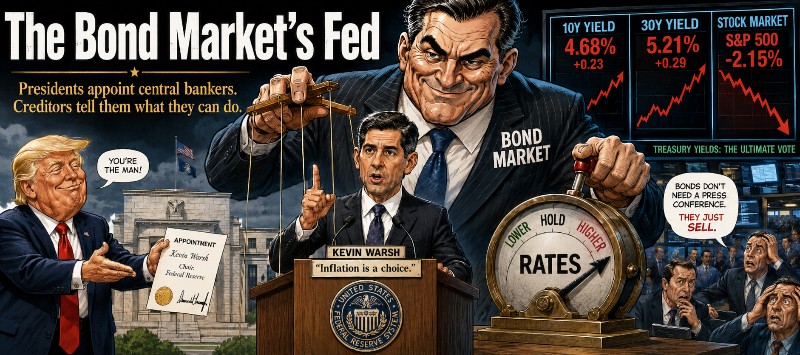
"Inflation is a choice."
Kevin Warsh has said it so many times now that traders count it like a scoreboard. He said it at his Senate hearing. He said it at his first press conference. He said it again yesterday, at his second FOMC meeting as Fed Chairman.
And yesterday, the Fed held rates steady at 3.50% to 3.75%. Again.
But the vote wasn't clean. Three regional presidents — Beth Hammack of Cleveland, Neel Kashkari of Minneapolis, and Lorie Logan of Dallas — voted no. They wanted a hike, right now. The final tally was 9-3.
Compare that to Warsh's first meeting in June. That one was unanimous, 12-0.
Something changed in six weeks. And it tells you who Warsh is actually working for.
The Confession
Let's start with why "inflation is a choice" matters so much.
For years, Fed officials blamed inflation on everything but themselves. Supply chains. Pandemics. Greedy corporations. Wars overseas. Anything except the printing press.
Warsh just said, in plain English, that persistent inflation happens because central bankers decide to tolerate it. Not because of bad luck. Because of choices made by people with names and titles.
That's not a new idea to readers of the Rude. Milton Friedman said it seventy years ago: inflation is a monetary phenomenon. You've heard it here in a dozen different ways, from the Patience Tax to the Ratchet.
But hearing it from the man actually running the Federal Reserve? Now, that’s new.
The people who spent nearly 40 years insisting the Fed manufactured the inflation problem, rather than merely reacting to one, just got the loudest possible confirmation. And it came from inside the building.
Who Warsh Actually Answers To
The Senate confirmed Warsh in May by a vote of 54-45. That's the closest, most divided confirmation in the history of the Federal Reserve chairmanship. President Trump picked him. Half of DC fought it.
But it’s important to understand that what a leader believes isn’t important. It’s who keeps him in power. Every leader serves his winning coalition, the specific group of people whose support he actually needs to survive. Everyone else is noise.
Trump nominated Warsh. But Trump isn't the “coalition” that keeps Warsh's policy credible day to day. That job belongs to a much bigger, much less forgiving group: the global buyers of US Treasury debt.
If bond investors decide Warsh is soft, they sell. Yields spike. The dollar may wobble a bit, but it ultimately strengthens on the yield increase. Mortgage rates climb. Trump's own economic agenda suffers. Warsh's only real leverage, the thing that makes him useful to the man who appointed him, is credibility with people who never voted for anybody and don't answer to the White House at all.
That's why a Trump-picked Fed chair is talking like a hawk while inflation runs at 4.2%. He's not serving the man in the Oval Office. He's serving the market that would happily wreck an economy over a rate cut it doesn't trust. There’s a reason why James Carville wants to return in his next life as a bond trader.
What Happened to Your Money Yesterday
Despite Warsh’s intentions, the market didn't love any of this.
Stocks fell during his press conference. The Dow dropped over 1,100 points. The S&P 500 and Nasdaq both slid over 1.5%. Meanwhile, the 10-year Treasury yield rose to 4.69%, and the 30-year climbed past 5.21%. The 2-year yield, more tied to near-term Fed expectations, actually fell slightly.
Traders now expect at least one 0.25% increase by year-end, not the cut markets had been begging for. According to Fed Fund futures, the probability of a September hike is over 60%.
Wrap Up
If you've spent the last few years holding cash, gold, or short-duration assets while your neighbor chased every rate-cut rally, today was a small down payment on being right.
The Patience Tax isn't gone. But for the first time in a long while, the Fed chairman is talking like someone who intends to reverse it.
Position for higher rates staying around longer than Wall Street wants. Favor shorter-duration bonds over long ones; the long end is where the pain is landing hardest. Keep some dry powder. And watch Warsh's mouth in Jackson Hole next month as closely as the market will. He's already told you it's where the real signal lives.
You Don't Own Your Stocks
Posted August 21, 2026
By Sean Ring

Buy Now, Pay Later
Posted August 20, 2026
By Sean Ring

The Empty Vault
Posted August 19, 2026
By Sean Ring

The $54.6 Billion Bottleneck
Posted August 18, 2026
By Sean Ring
Expensive Bread & Unaffordable Circuses
Posted August 17, 2026
By Matt Badiali