Posted July 25, 2025

By Byron King
What I Learned Inside a Burning Schoolhouse
Reflash, noun, re· flash (ˈ)rē+: A situation in which a fire, thought to be extinguished, resumes burning.
From Ukraine to the Middle East, it’s clear that the world is in a period of war. In this sense, unexpected things can occur, and you must remain vigilant and prepared to protect your wealth.
With this in mind, let’s begin with a story about firefighting. Then, we’ll discuss how to preserve wealth and generate income during a time of widespread conflict. Sounds good?
Okay, it’s off to class we go…
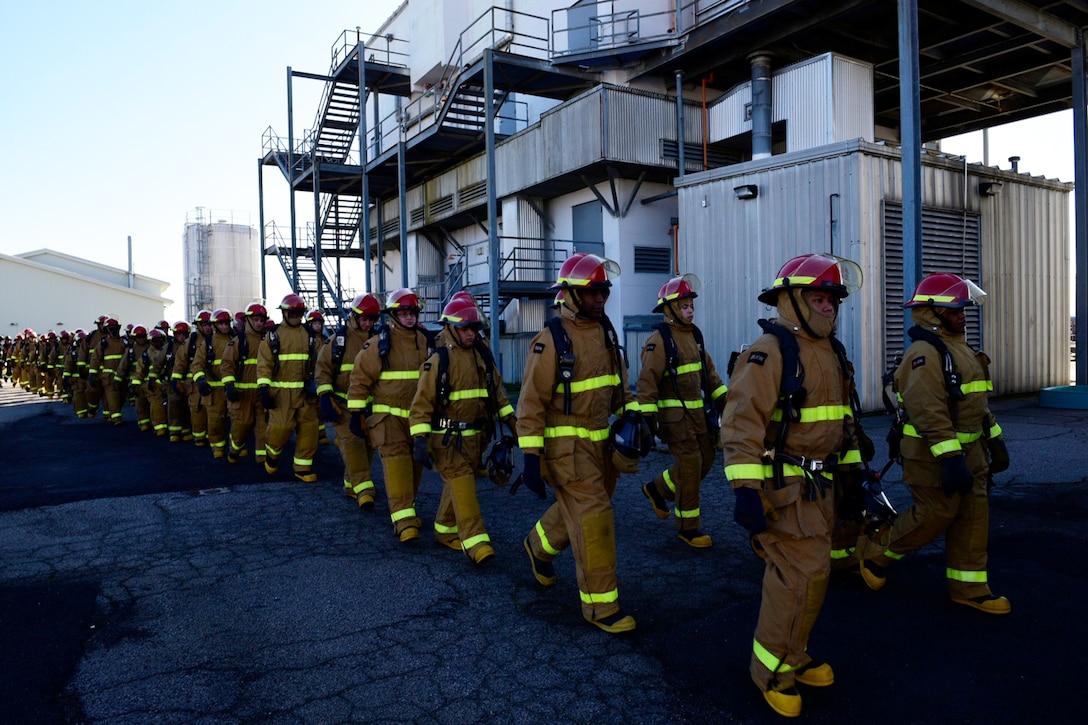
The school bell is ringing! Courtesy U.S. Navy.
A Schoolhouse that Burns
A long time ago, when I was in the Navy, I attended a school in San Diego called “Shipboard Firefighting.” As the name implies, the idea was to learn how to fight a fire onboard a Navy warship. That’s because, per regulations, everyone assigned to a Naval vessel must train as a firefighter, no matter what other role you play.
For example, in my case, I was a flight officer in a squadron assigned to the air wing of an aircraft carrier. My main job was to be good at flying the now-long-retired Lockheed S-3 “Viking.” In other words, I was aircrew, but if there was ever a fire on the big gray ship, I was expected to know how to suit up, grab a hose or other piece of equipment, and charge into the fray.
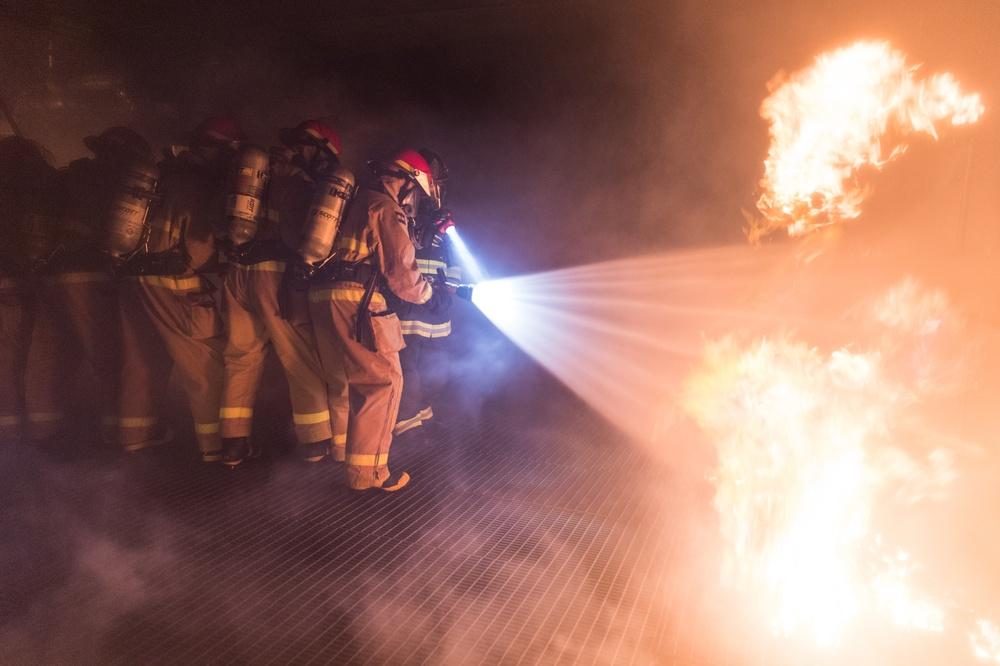
Practice makes perfect. Courtesy U.S. Navy.
Look at it this way: if there’s a fire in your house, you get out and cross to the other side of the street; if not, head down the block. And of course, you summon the local fire department. But if a fire breaks out on a ship at sea, there’s no such choice. You have nowhere else to go, so you face it and fight it.
The Navy’s institutional rationale behind sending personnel to firefighting school is that everyone on its ships should possess basic, common skills to help in times of peril. Plus, this kind of training helps build people’s confidence. And there’s another angle characterized by a macabre old joke, namely that you either battle the flames now, while you still have a ship, or you talk about it later when everybody is bobbing around in life rafts, out in the ocean.
At any rate, I became a student at the Navy’s burning schoolhouse. On a typical day and in typical Navy fashion, instructors presented lectures and slide shows about fires and firefighting; plus, of course, we took written tests. And yes, it was interesting.
But some kinds of learning don’t happen in a comfy classroom. For me, at least, the true and impactful education – those moments when the material became forever hardwired into my brain – occurred when we all donned gear and literally walked into a mini-hell. That is, we entered compartments that were nothing but burning infernos (see the photo above), filled with raging flames fed by the good old Navy jet fuel. And no, no, no… You do not forget experiences like that.
And do you know what? It was great! I loved it! The Navy firefighting school was among the best and most practical courses I ever took in my entire life. I would do it again tomorrow, but maybe that’s just me.
Now, if you’re wondering, I’m discussing all of this because one takeaway from that course was an understanding of what’s called the “fire triangle,” a simple concept that explains the necessary ingredients for most fires, namely fuel, plus heat, plus oxygen:

Fire triangle. Courtesy U.S. Fire Administration.
This is a basic notion, and even intuitive. However, the fire triangle concept is also elegant for explaining the process of combustion. Although yes, some fires are more complex than others because certain materials burn even in the absence of oxygen. For example, on occasion, the components of a lithium battery cook off, as we’ve seen with electric vehicles (EVs):
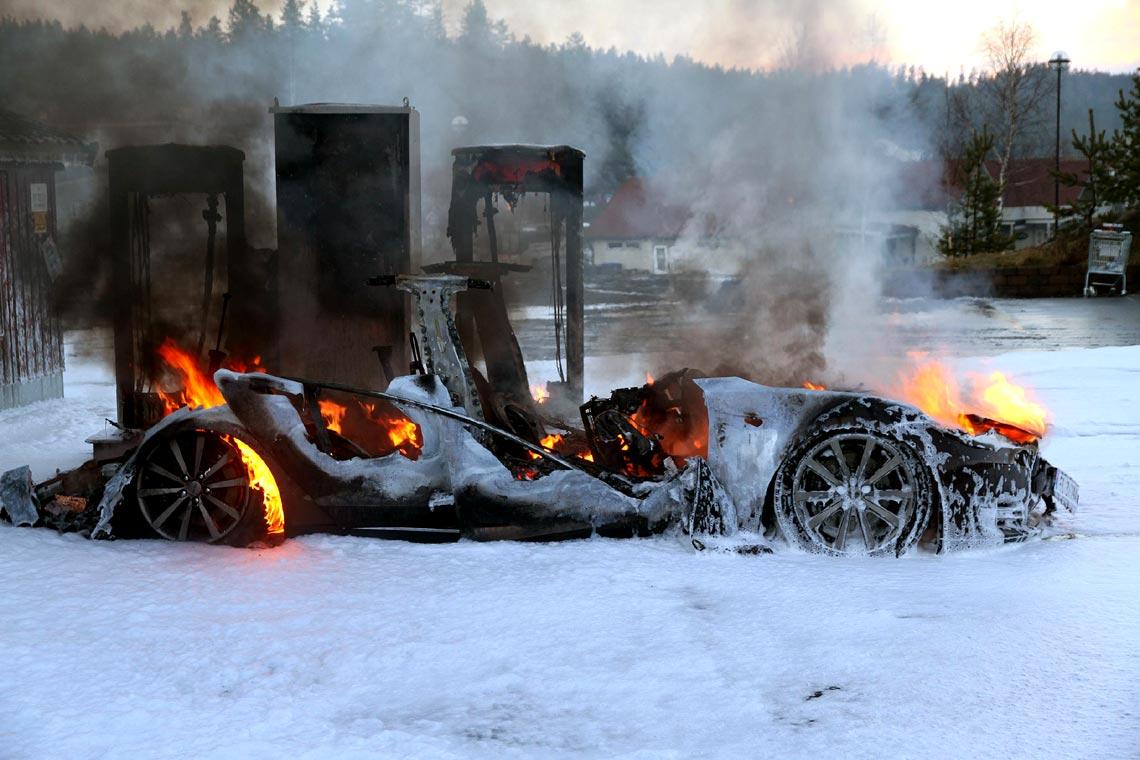
Whoops… EV burns at a charging station. Courtesy autoevolution.com.
And whether it’s a burning house, or a shipboard fire, or an EV going up in (very toxic) smoke, another angle to consider is a feature that constantly worries firefighters, namely, a phenomenon called “reflash.” Indeed, this is an important idea to understand. And at this point, I’ll repeat the definition of the word, which I placed at the top of the article:
Reflash is “a situation in which a fire, thought to be extinguished, resumes burning.”
In some cases, even after a fire is extinguished with water or otherwise suppressed, fuel and heat can remain, leading to a new fire. There’s fuel, and it’s hot, and it combines with oxygen in the air to burst back into flame. Or perhaps you’re dealing with still-hot EV lithium batteries after the initial fires, also notorious for exhibiting reflash.
My point is, some things just want to burn. Indeed, they’ll burn until nearly every last atom and molecule has been consumed. And with this in mind, let’s pivot subjects… and discuss the recent, so-called “cease fire” in the Middle East, between Israel and Iran, which kind of/sort of/maybe includes the U.S.
In other words, we should wonder if the Israel-Iran war might do a reflash?
Welcome to the Forever War
I won’t belabor the military details of Israel versus Iran. You probably followed news accounts of the recent conflict between the two countries. It was hard to miss.
In essence, Israel bombed Iran and then, in return, Iran shot multiple waves of missiles at Israel. Boom-boom-boom; it led to horrendous levels of death, injury, and destruction on both sides. Then, after about twelve days, the fighting came to a relatively quick halt when President Trump sent B-2 bombers and Tomahawk cruise missiles to smash Iran’s nuclear complex.
It’s no surprise that when strategic assets like B-2s and cruise missiles wreck a massive nuclear target, the world takes notice. And within 24 hours or so, we learned of a so-called “cease-fire.”
No slave to protocol, Trump announced the end of hostilities over his personal social media account. “You guys must stop the fighting,” said the president (I’m paraphrasing). To which Israel said, in essence, “Huh?” And Iran replied, “No way, we’ll fight those infidels to the last drop of blood,” or words to that effect.
Then, Trump spoke to the Israelis, and Russia’s President Putin and China’s Premier Xi spoke to the Iranians. Some sort of informal, unwritten deal happened. Israel stopped bombing Iran, and Iran stopped shooting missiles at Israel. And yes, I’m simplifying things, but that’s the gist.
Looking back to the early days of the war, the prices of oil, gold, silver, and many other commodities skyrocketed. That’s because people and markets across the world were nervous about this conflict and where it might go, so they bought into safe-haven assets, especially energy and precious metals.
Then just as suddenly, and with Trump’s announcement of a cease-fire, prices for these items fell, with oil down especially hard. And stock markets rose across the world. Apparently, this means a lot of “smart money” believes that we’ll have peace in our time, right? Umm… Well, good for them, but let’s at least be a little bit careful about that.
In other words, the kinetic parts of the war have stopped. But cease fire or no, has anything happened to reduce the foundational causes of the war? Or, asked another way, is the “fire triangle” broken? Could it all reflash?
Israel attacked Iran out of concern that the latter nation was making final moves to build nuclear weapons. Yet despite all the fighting, Iran still retains core elements of science, engineering, and technology that it needs to continue a nuclear program. And thus is Iran’s nuclear progress delayed but not halted.
Plus, Iran still has its missile factories and innumerable other weapon plants. While at higher levels of politics, it’s not like Iran’s theocratic regime now holds any new respect for the very existence of Israel, not more than it did just a few weeks ago, pre-war.
Doubtless, the Israelis still believe that Iran remains a long-term threat. And Israel still has its powerful air force, although the equipment surely needs maintenance, and the country’s munition stocks must be replenished.
And all of this means that, no matter what you hear about deals and peace, the Israel-Iran conflict is ripe for a reflash, sooner or later. The battles are far from over.
Let’s Look at Hard Asset Trends
Of course, unless you serve in a high-level job within the government of the U.S., Israel, or Iran, there’s not much you can do to change the direction of events. That kind of control is above our pay grades. Therefore, it is essential to prioritize your well-being and that of your family and to dedicate yourself to protecting and growing your wealth.
Begin with gold and silver. The outbreak of war drove the price of gold up by $100 per ounce or so, from the $3,340s to the mid-$3,460s. And now, with the ceasefire in place, it has, to all intents and purposes, pulled back to where things began in mid-June. It was just a quick trip up and down the elevator. However, one thing has not changed for gold: central banks continue to buy large amounts of it.
Just as was the situation pre-war, the ongoing, two-year rise in the price of gold has not been driven by coin buyers down at the coin shop. No, the price move in gold is built on a significant trend of accumulation by central banks across the globe. Collectively, their motive appears to be de-dollarization and a flight to safety, as foreign bankers and politicians look on with horror at the U.S. fiscal budget mess and its long-term debt situation.
Thus, expect gold to continue to rise in price despite the end to fighting between Israel and Iran. Accumulate physical metal and look at large-cap and medium-sized miners like Newmont (NEM) and Kinross Gold (KGC).
We also saw a similar, war-related move with silver, which quickly rose from the $33 range per ounce, pre-attack, to over $37 after the war began. Now, the metal trades in the $38 to $39 range.
Silver has a monetary aspect, but its price is controlled mainly by industrial demand. And in this sense, there’s not much downside risk with silver from here. It’s easy to see limits to global supply, which means eventual scarcity. There is also strong demand for silver from the industry, particularly in the electronics and solar panel sectors.
If you’re looking for miners, consider solid plays like Pan American Silver (PAAS), Coeur Mining (CDE), and Hecla (HL).
Oil prices also underwent a significant shift due to the Israel-Iran war. Before the war, oil traded at around $60 per barrel. Not long after fighting broke out, barrels traded up into the $77 range. And now with the ceasefire, oil is back in the mid-$60s.
When fighting broke out, one big concern for oil traders was that the Israel-Iran conflict might prompt the latter nation to restrict passage or block shipping via the Strait of Hormuz, a relatively narrow channel of entry to and exit from the Persian Gulf. Here’s a map that shows the broad outlines:
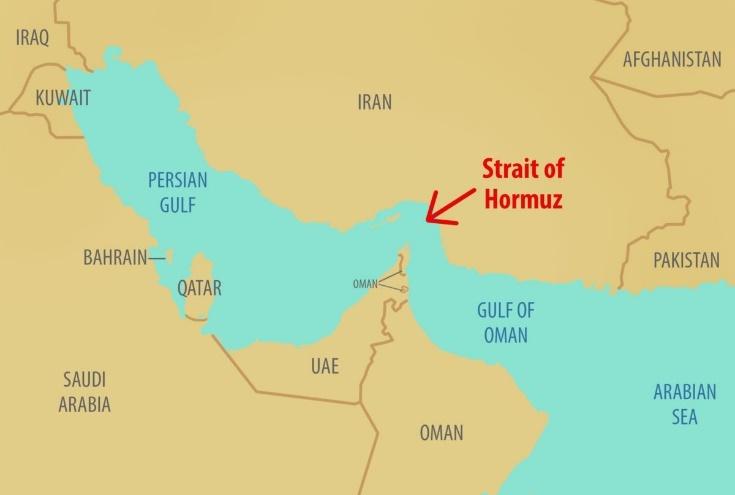
Strait of Hormuz. Courtesy boereport.com.
Hormuz is among the world’s most critical zones of ocean commerce. Over 20% of the world’s available oil output passes through Hormuz every day, and that number grows to about 33% if you look at only seaborne oil. Plus, over 25% of the world’s liquefied natural gas (LNG) passes through Hormuz.
Meanwhile, Hormuz is a critical pathway for much other oceanic commerce, such as bauxite ore to the United Arab Emirates (UAE) and refined aluminum out of UAE smelters. Or consider cargoes such as humble limestone, exported from the Middle East to cement makers across East Africa and South Asia.
I could discuss items that transit through Hormuz, but the idea is simply to highlight the strategic importance of geography in the region. And how closing the Strait of Hormuz would impact countless supply chains worldwide.
At the same time, it seems unlikely that Iran will close Hormuz, if for no other reason than that Iran also exports oil, LNG, chemicals, and many other goods through this passage. And much of the cargo that passes through there is destined for nations with which Iran has good relations, such as those across Africa, South Asia (particularly India), and, of course, China.
Still, oil ought to be a part of your portfolio. Currently, ExxonMobil (XOM) is trading on the lower end of a two-year range, while its dividend yield remains solid at over 3.6%. Or consider Chevron (CVX), which is also trading on the low side of its range and yielding over 4.75%.
These above-named companies are not official recommendations, but they look good to me as safety plays in a dangerous world, where the hot war may be in “cease fire” mode but could still see a reflash. If you buy, wait for down days in the market, use limit orders, and never chase momentum.
And I’ll end it here. Thank you for subscribing and reading.

Dynamite Dolomites!
Posted June 26, 2026
By Sean Ring

Broken Window Press
Posted June 25, 2026
By Sean Ring

The Skunk at the Garden Party
Posted June 24, 2026
By Sean Ring
Black Box State
Posted June 23, 2026
By Sean Ring

Financial Fathers
Posted June 19, 2026
By Sean Ring