Posted July 20, 2026

By Zach Scheidt
The SPR Boomerang
At Paradigm, we’re fortunate to have a team of contributors who each bring a genuinely different lens to the markets.
Byron King has spent years studying the physical and geological realities behind energy and natural resources. These are the kinds of hard constraints that don't show up in a headline but eventually show up in a price.
My own background is different.
After running a hedge fund for most of the 2000s, my focus has been far more specific: identifying asymmetric risk.
I’m talking about situations where the potential reward is meaningfully larger than the potential downside, then structuring trades to take advantage of that imbalance as efficiently as possible.
This week, those two perspectives are pointing in the same direction.
The Clock is Ticking on Cheap Oil
Byron has been warning for some time about the condition of the U.S. Strategic Petroleum Reserve, specifically the salt caverns used to store it.
According to Byron, there are real operating constraints on how low the SPR can fall before it runs into genuine logistical and geological limits.
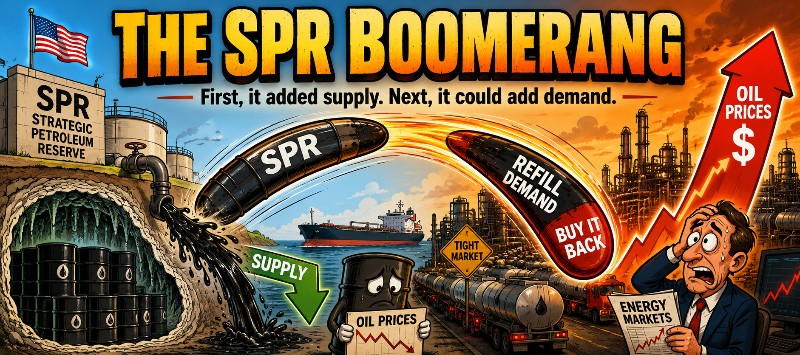
Recent SPR releases have supplemented global oil supply, helping keep prices more contained than they otherwise might have been, even as conflicts have disrupted parts of the world's energy supply chain.
Commercial inventories, separate from the strategic reserve, have also declined significantly.
Now think about what happens next.
Those SPR releases can’t continue indefinitely. When they slow or stop, that supplemental supply disappears from the market.
At the same time, global demand for oil continues to grow. Eventually, the SPR itself will need to be refilled, creating an entirely new source of demand on top of existing consumption.
Layer in refinery strikes, export disruptions, and shipping bottlenecks across key waterways, and you have a tightening supply meeting rising demand.
That’s about as basic as economics gets.
Lopsided Risk/Reward
I’m not in the business of predicting exactly where oil prices will go or precisely when they’ll move.
What I look for is a situation where the risk and reward are genuinely lopsided, where a well-defined downside sits next to a disproportionately large potential upside.
This energy setup fits that description.
The downside appears relatively limited. Oil prices don’t need to spike dramatically for this thesis to work. They simply need to stop benefiting from a temporary support mechanism that’s unlikely to last forever.
The upside, meanwhile, could involve a genuine structural supply squeeze colliding with demand from multiple directions.
When one side of a trade rests on a temporary prop, and the other rests on physical reality, I pay attention.
The Stock Built for this Setup
Once I’ve identified an asymmetric opportunity, the next step is finding the right investment vehicle.
In this case, that means looking at producers and other companies whose profitability moves directly with oil prices.
One name I personally own through Income Alliance is Exxon Mobil (XOM).
It’s about as direct an expression of this thesis as you’ll find: a major producer whose earnings and asset values generally move with crude prices.
If this setup unfolds as expected, companies like Exxon stand to benefit.
Make Your Money Work Smarter, Not Harder
The final piece of my process is deciding how to structure the trade.
Owning shares outright is one option, but it’s rarely the most capital-efficient approach.
When I have a strong conviction, I often prefer deep-in-the-money call options rather than buying the stock itself.
Because these options have strike prices well below the current share price, they already contain substantial intrinsic value and relatively little time premium.
As a result, they tend to move much like the underlying stock while requiring significantly less capital.
That leaves additional capital available for other opportunities or simply in reserve.
The Winning Formula
This is how I approach nearly every trade I make…
- First, find genuine asymmetry, a setup where the odds are structurally in your favor, not just a hunch about direction.
- Second, find the right vehicle to express that thesis cleanly.
- Third, structure the position so your capital works as efficiently as possible.
Find the asymmetry.
Choose the right vehicle.
Structure it efficiently.
That’s the approach I’ve relied on for the past 25 years, and it’s exactly what I believe is developing in the energy sector today.

Silver’s Double Whammy
Posted July 17, 2026
By Sean Ring

America 250: Roll On, Big Boy… Roll On!
Posted July 16, 2026
By Byron King

The Taxpayer Cloning Machine
Posted July 15, 2026
By Sean Ring

The Vote That Never Was
Posted July 14, 2026
By Sean Ring

Gas, Guns, and Profits
Posted July 13, 2026
By Matt Badiali