
Posted September 08, 2026

By Byron King
The Sea Keeps Honest Books
Finally, the aircraft carrier USS Abraham Lincoln (CVN-72) has pulled into port; five days in Thailand after nine months “on the gunline” in the Arabian Sea, and longer if you count the transit from homeport in San Diego.
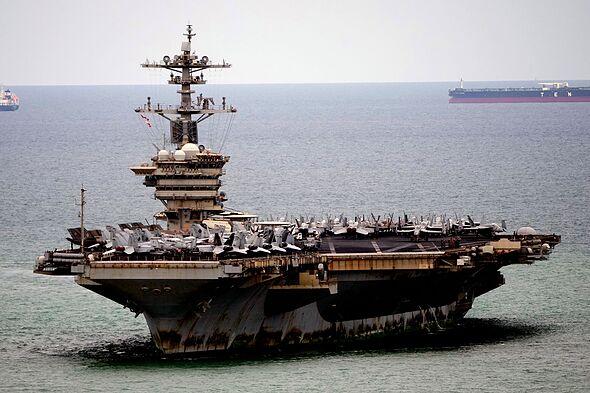 Ten months at sea will do this to you. USS Lincoln in Thailand. Credit AFP
Along the way, headlines pounded home the narrative that the Big Problem aboard the Lincoln was bad food and thin rations. Plus, in addition to inadequate gruel, tired sailors had to deal with broken plumbing, and they received no mail, let alone no email because (well, duh) the ship was in a combat zone, and electronic emissions are a great way to become a target.
In short, goes the story, our guys & gals had bad days on the big steel boat. Of course, politicians and media sharks love stories like this with convenient villains: Pete Hegseth, Secretary of War, and his boss, President Trump, who sent our people into harm’s way without enough frozen cheese in the reefers.
Indeed, both Hegseth and Trump should walk the plank because – and people say this with a straight face – the ship’s galley came up short. Well, first, I know a few things about sailing on aircraft carriers. And second, evidently, that’s not what happened, and we know it after sailors talked with media ashore in Thailand. Per no less than the Wall Street Journal, the “bad food” angle is revealed as a distortion of fact, and besides, the chow isn’t the real story.
In fact, the real story behind the Lincoln deployment is how it rips away the bandage and reveals all the accumulated scar tissue of Washington’s long-term underinvestment in the Navy: too few ships and shipyards; too few escorts, oilers and combat logistics vessels; too few sailors at sea and skilled shipbuilders ashore; too many missions; too few high-end munitions; and too much political mythology.
On any given day, the Navy operates 291 battle-force ships against a statutory requirement of 355. Meanwhile, the Navy’s operational plan for 2026 reveals that although the shipbuilding budget has grown, new builds are far behind the curve. And in this sense, the story isn’t a bad-food-day on the Lincoln; it’s a national-scale strategic problem.
The Geology of National Decline
I’m a long-time Navy guy, but deep down I’m a geologist. And to my geologically trained mind, national power declines the way mountains erode. Begin with uplift and exposure; then comes continuous weathering and deterioration from rain and sun, year after year, grain by grain, until one day the ridgeline that dominated a horizon is just a rounded hill.
And naval power works the same way. Congress pinches pennies and tells the Navy to, per the old saying, “Do. More. With. Less.” So, ships are laid up, and maintenance is deferred on those that remain. Shipyards close, and the land gets sold to some condo developer (looking at you, Mare Island!).
Or a floating dry dock is “de-accessed” and sold for scrap (to a Chinese buyer, even). Harbor dredging is shortchanged. Apprentice trade programs lose funding, and future welders and electricians never graduate. While design bureaus give and take conflicting guidance and forget how to be creative, let alone how to freeze the blueprints so that a builder can finally cut steel.
In Washington, each event seems like another day at the office. It’s manageable. Cumulatively, though, it all leads to an industrial-military unconformity; or in geological terms, a missing layer in the national rock record where supply chains, final assembly, and competence used to be. So, “Do. More. With. Less.” they say? Ha! Eventually, you do less with less.
Meanwhile, shipbuilding is a superb measure of national power, because creating a warship reflects a nation’s strengths, and also forces hidden weaknesses into daylight. You need steel, engines, castings, forgings, electronics, nuclear expertise, waterfront acreage, dredged channels, skilled labor, stable requirements, patient capital, and a government capable of making consistent strategic decisions year after year. And that last point is critical: you must respect time.
Consider the future USS John F. Kennedy, CVN-79, a new aircraft carrier authorized 18 years ago, but still not delivered from builder Huntington Ingalls (HII) to the Navy. And don’t blame HII, which has long stated that it will construct whatever the Navy wants, if only the Navy makes its requirements clear.
Ask the people at HII what takes so long; and yes, I’ve done exactly that. They say that they can’t hire enough skilled people to do the work, and supply chains for almost everything are frighteningly thin, all the way to mills, mines, and ore in the ground.
In other words, America has people problems, rooted in a broken, corrupt education system and lack of focus on useful trade skills. Plus, it has industrial problems rooted in three generations of business decline; aka the nation’s hollowed-out manufacturing base. And these are cultural-political problems, not easily addressed by a shipbuilding company, or even the Navy as an institution.
The Fleet Behind the Fleet
Americans like to focus on the pointy end of the spear: aircraft carriers, fast jets, fire-breathing missiles, SEALs climbing ropes over the rails. But wars are not won by spear points ripping across the battlespace. They are won – or lost – at the strategic and operational levels; that is, in the manner in which strategy becomes operations.
In other words, you win your wars with energy and industry, which transform into logistics that appear as convoy routes and fuel plans, depots, repair availability, deep magazines, and deployment schedules that place combat power at the right spot and right time to be effective. The unromantic truth is that logistics is national strategy at work.
Sure, an aircraft carrier’s nuclear reactor powers the ship moving through the water. But reactors don’t make jet fuel, bombs, cheeseburgers, soap or toilet paper. Those arrive on other hulls, from other ports, across sea lanes that an enemy will try to cut. And USS Lincoln’s marathon deployment made that truth visible.
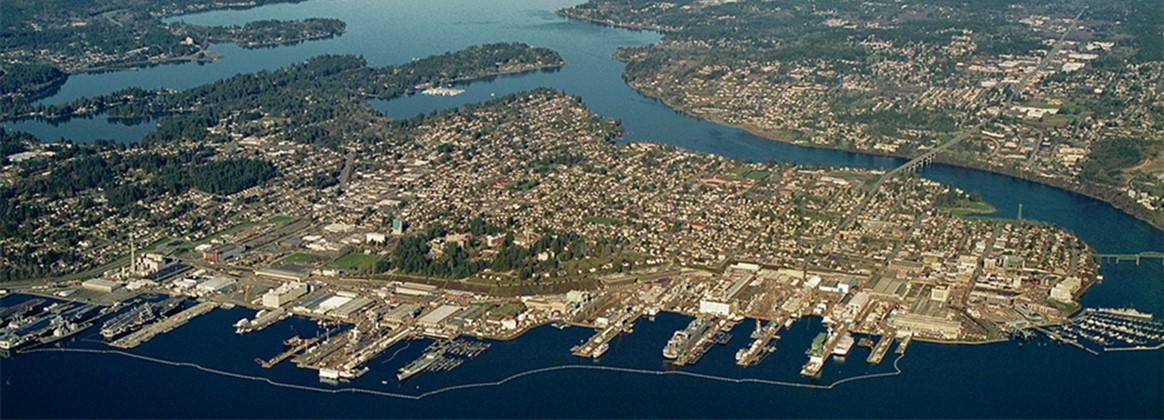 USS Lincoln’s next home: Bremerton Shipyard, for deep maintenance. Credit NavSea.
When a deployment lasts 10 months or more, it means national missions have expanded beyond available national assets. And looking ahead, beyond the Lincoln’s actual time at sea, the Navy now faces the nettlesome issue that the ship will arrive late to scheduled maintenance, which reboots the calendar of America’s very few facilities that can accept and work on such a massive hull.
The Myth Above the Waterline
At the political-media level, America still talks as if it possessed the industrial depth of 1944. Announce 355 ships, but only 291 in the water. Announce a “Golden Fleet,” complete with glossy graphics and maybe the Navy Band. But you can’t fool reality.
Politicians and policymakers make military demands, but at some level PowerPoint meets old Archimedes, if not King Neptune. The sea sends an invoice. The world’s oceans have not shrunk, and neither have the politicians’ long lists of national commitments.
The Navy routinely operates from Antarctica to the North Pole. The Pacific is as vast now as it was in World War II. The Middle East has long been hungry for ships. Europe is a constant security problem. Even the formerly placid Caribbean is a combat zone. And the Navy’s ships and crews have become a line of credit used to finance strategic promises that fleet size and the industrial base can’t pay down.
Meanwhile, on the other side of the world, China apparently understands the physical side of hard power. Its yards weld steel, build tonnage, preserve waterfront, and train labor at scale.
Yes, America has magnificent warship-building firms: HII and its yards at Pascagoula and Newport News build fabulous ships. And General Dynamics (GD) Electric Boat, Bath, and NASSCO build superb products. Plus, we have other companies at a smaller scale. But a handful of primes can’t carry the whole load required of a truly maritime nation. The country requires many more dredged ports, more military and commercial yards, more Navy crews and merchant mariners, machine shops, trade schools, industrial suppliers, and laws that permit waterfront industry to exist.
Failure to Imagine
When confronted with some surprise – whether it’s feeding sailors or getting hit with 9/11 – official Washington often talks about a “failure of imagination.” It makes what occurred seem like a rare creative lapse; a bizarre black swan that slipped past our government’s otherwise excellent collection of great minds. Yeah… right.
Usually, though, disaster doesn’t really spring from a shortage of imagination; it’s more like people just failed to imagine. And consider how, for three generations, America required no military genius to foresee that shrinking the Navy and maintaining missions would lengthen deployments. No crystal ball was needed to see that closing yards would reduce shipbuilding. No war game was needed to understand that conflict on the other side of the planet would require merchant lift, naval auxiliaries, escorts, oilers, munitions and logistics ships, surge capacity and repair capability.
For many decades, Washington policymakers demanded that the Navy be ready to deter China, support allies, polices sea lanes, and be present in every theater. Meanwhile, the D.C. “deciders” failed to fund the commitments, let alone think through what force levels they require, and what industrial system sustains naval forces.
Now with Lincoln, we see what happens when policy demands exceed strategic resources, and naval operations become a form of controlled exhaustion. Yes, the aircraft carrier stayed out too long. So, what happened? The news media focused on dinner trays.
Lessons from the Lincoln
Let’s do some takeaways:
- Industrial capacity drives combat power. Don’t just focus on missiles or guided bombs. In fact, decisive naval power requires shipyards, welders, oilers, merchant vessels, and dry docks. If those elements are missing, the gray-hull warship is a museum piece, still full of live ammunition.
- Strategy must govern operations. No fleet can cover every ocean with too few hulls. When commitments exceed force generation, commanders don’t magically create capacity; they consume readiness, metal and people.
- Time is the most unforgiving constraint. Naval decline takes decades to become visible, and decades to reverse. The ships America needs now should have been planned and built 25, 20, 15, and 10 years ago. And the ships America will need in 2040 should be on the boards right now, along with trade apprentices in school, hard design decisions, long-lead contracts for metal and machines, waterfront real estate and “program of record” budget lines.
Final Thoughts
I wasn’t aboard the Lincoln, and I don’t know if the galley served crummy meals. But whatever happened, that particular aspect of the story is a typical media smokescreen for other and deeper, long-term issues.
Great powers don’t awaken one morning and discover that they’re weak. No, the mouthpieces explain away each problem: the lack of people or supply chains; the closed shipyards; long deployments; and empty sea where a logistics vessel ought to be. And after a time, exceptions become the system. Until the balloon goes up, of course, and… all is revealed.
Looking ahead, America must rebuild its maritime power. This will require money and time. And hey, be happy that it’s investable! The country still has capital, people, knowledge, and geopolitical need. But first, the culture itself – politicians and the media – must accept the reality of the evidence. Just be honest about it all, if honesty can even process anymore.
The next war – and there WILL be a “next g0dd@m war, okay?” – will not unfold according to the mythology of movies, let alone zoom-zoom, boom-boom Top Gun movies. It will count trained crews, capable hulls, fuel loads, deep magazines, repair days, and miles of contested ocean. That’s what will win – or lose – the fight. Because the sea keeps honest books.
That’s all for now. Thank you for subscribing and reading.

All That Glitters Is Diesel
Posted October 22, 2026
By Sean Ring

Treason’s Greetings!
Posted October 21, 2026
By Sean Ring

Zach’s Second Opinion
Posted October 20, 2026
By Zach Scheidt

A COLA, But No Smile
Posted October 20, 2026
By Zach Scheidt

Give Me Liberty or Give Me Beige!
Posted October 19, 2026
By Matt Badiali
