Posted October 14, 2026

By Matt Badiali
The Half-Life of a Bargain
An opportunity is building in uranium miners.
As you probably know, electricity demand is growing worldwide. It’s most visible here in the U.S. Electric power demand was flat for decades, and now it’s exploding. Rising rates are so widespread that they're a major political hot potato for the mid-term elections.
Rising demand and soaring rates brought nuclear power back from dormancy. We spent decades dismantling nuclear power all over the world. Now it’s coming back quickly.
In the States, the most iconic example is Microsoft and Constellation Energy partnering up to restore one of the nuclear power units at Three Mile Island in Pennsylvania. The federal government supports this project to bring power online sooner rather than later.
These giant nuclear power plants buy their fuel through long-term contracts. The contracts do two things: secure the uranium itself and its conversion to fuel. According to the Nuclear Newswire, the price of contracted uranium in 2025 was around $55 per pound. Spot contracts accounted for about 13% of the uranium delivered in 2025. Those spot contracts came with a much higher price of around $76 per pound.
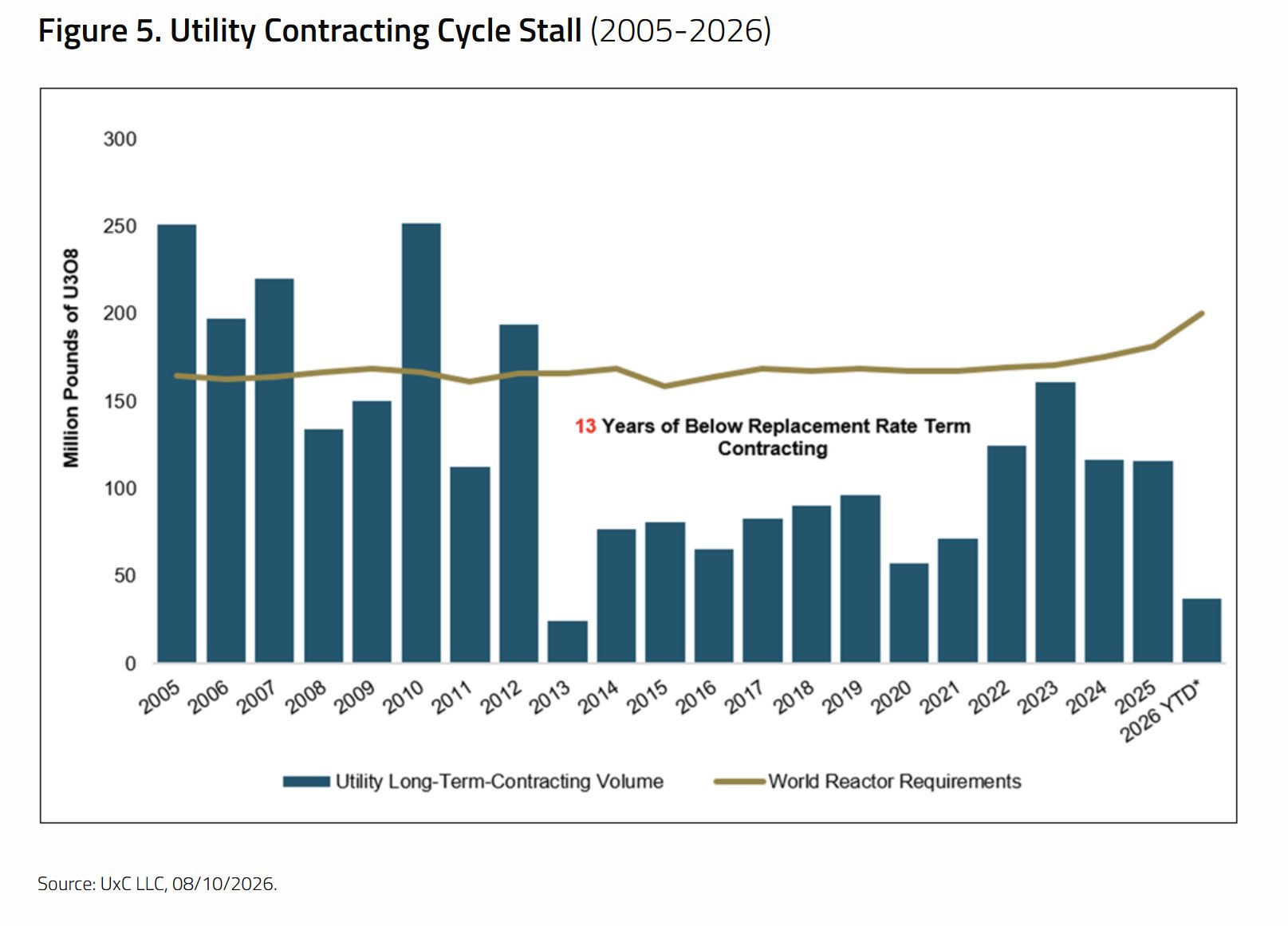
The gap between the long-term price and the spot price creates a problem. It means that utilities aren’t signing enough new material contracts today. They want to use every bit of their existing contracts and delay signing new ones.
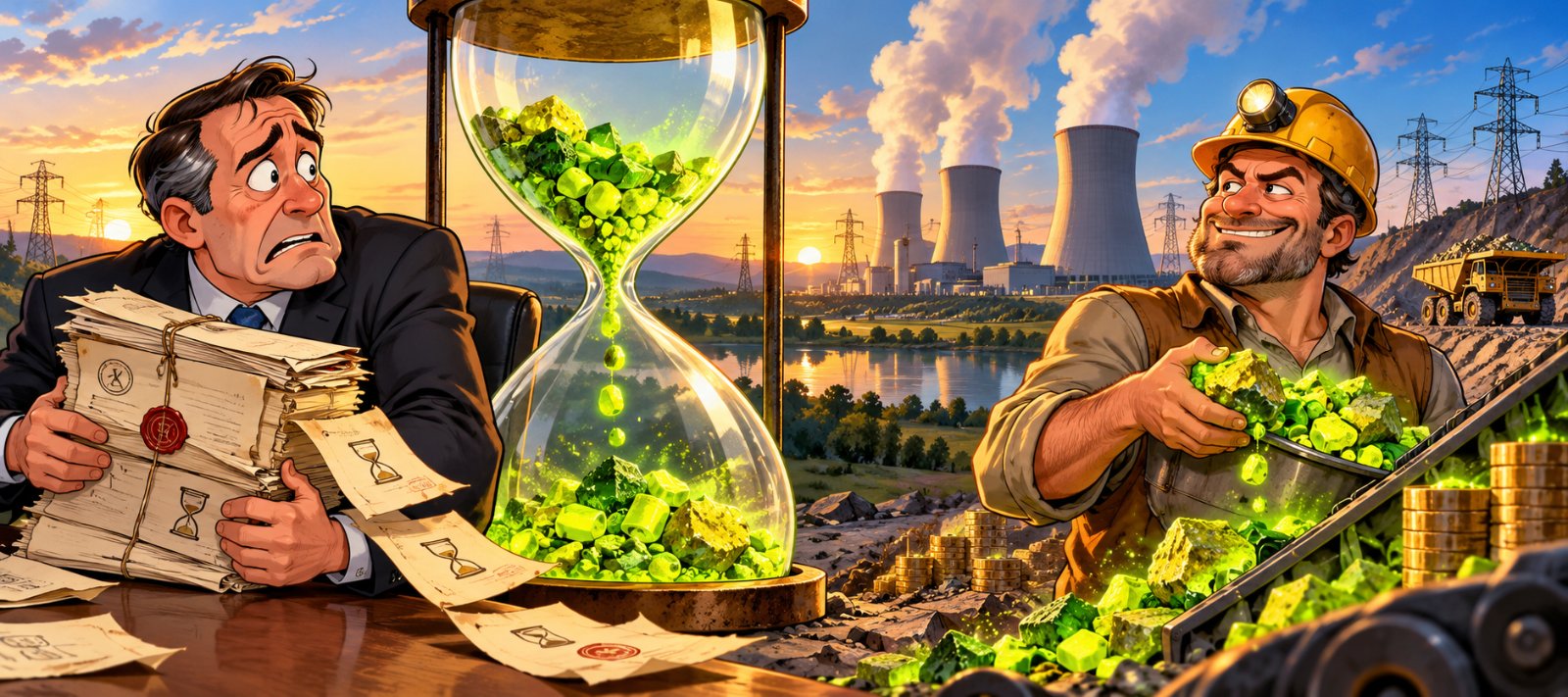
That’s because the contract price is nearly half the current spot price. And that apparent lack of demand is driving down the prices of both the commodity and the miners:
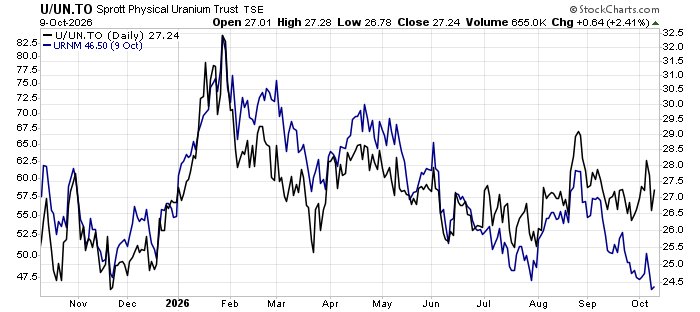
The blue line is the Sprott Funds Uranium Miners ETF (NYSE: URNM). It holds major uranium names like Cameco Corp. (CCJ), NexGen Energy (NXE), Kazatomprom (KAP), among others. It also holds 15% of its fund in the Sprott Physical Uranium Trust (TSX: U/UN). So, major uranium miners are down more than URNM because the physical uranium price isn’t falling as fast.
None of this makes much sense in the long term. The opportunity is simple…nuclear demand is going up, not down. Today's contracts pay miners a fraction of the current spot price. And they expire between now and 2030.
In the U.S., about 98% of the nuclear fuel is under contract today. By 2030 (only three-and-a-bit years from now), only 60% of demand is covered. In Europe, contracted supply falls from 100% in 2030 to just 36% in 2034.
Here’s what we know right now…existing contracts pay uranium miners about $58 per pound. The spot price is closer to $98 per pound. That means the next round of contracts will push uranium prices higher.
That means uranium miners could see prices rise by as much as 70% over the next couple of years. And I don’t expect that to happen gradually. The contracts need to be closed in the next few years.
I also don’t expect the contracted uranium price to be at current spot prices. But there is a very good chance that it will be 50% higher. And when you do that to a miner’s revenue, its earnings explode.
Take giant uranium producer Cameco (NYSE: CCJ), for example. In 2026, the company plans to produce at least 19.5 million pounds at $63.00 per pound. Every extra dollar of uranium price should add $19.5 million to the bottom line. In 2025, the company earned $590 million. Here’s what that math looks like for Cameco’s earnings:
- A one-dollar increase adds 3% to the company’s earnings.
- An extra $10 per pound bumps that to 33%.
- A 50% increase adds $30 per pound…and doubles the company’s earnings.
That will happen across the board. Not tomorrow. Not next week. But probably within the next 12 to 18 months.
And the market is selling off uranium miners today. That’s an outstanding opportunity to get in on a market that should explode higher in the next couple of years. You can buy Cameco, the ExxonMobil of uranium. Or you can buy a basket like the Sprott Funds Uranium Miners ETF or the Global X Uranium Miners ETF (NYSE: URA).
Any way you play it, you should have uranium exposure now. Because the minute you take your eye off this sector, it will rocket higher.

Pump and Circumstance
Posted October 13, 2026
By Sean Ring

The Crusade That Never Paid
Posted October 12, 2026
By Sean Ring

No Farewell to Arms
Posted October 09, 2026
By Sean Ring

Just Blew It.
Posted October 08, 2026
By Sean Ring
Fission Accomplished?
Posted October 07, 2026
By Sean Ring
