Posted August 19, 2026

By Sean Ring
The Empty Vault
My dear friend and colleague Byron King has kept this secret well: Pittsburgh is a wonderful city. I’ve been pleasantly surprised by the cleanliness of the city and the kindness of its inhabitants. After 5 weeks in the cannabis-scented pigsty formerly known as the Big Apple, the Steel City has given me an unexpected and welcome respite.
This past weekend, I stood in the basement of the Drury Plaza Hotel in Downtown with my hand on a 34-ton steel door.
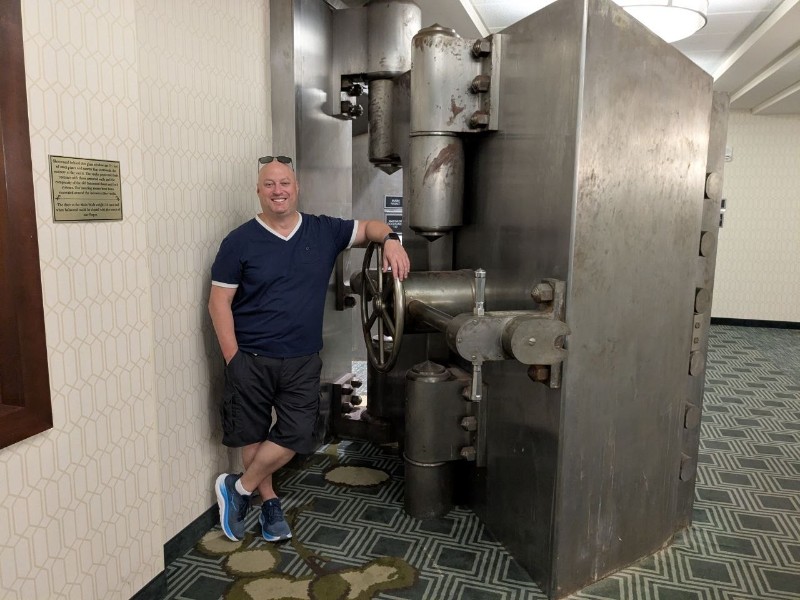 Your writer at the wheel. Credit: BFF and OWC Member “Iowa” Michael McKay
The door is so perfectly balanced that in the old days, a single finger could swing it shut. Behind it sits a meeting room. Sales teams now eat pastries where the Federal Reserve once stacked its cash… and gold.
From 1931 to 2012, this building at 745 Grant Street was the Pittsburgh branch of the Federal Reserve Bank of Cleveland. The Fourth District. You can still see the interlocking "4" and "D" pattern in the original metalwork.
The Fed moved out. Drury moved in. In an historically ironic twist, the hotel chain inadvertently built the most honest monument to sound money in America.
Let me walk you through it.
A Fortress Worthy of Money
The story starts in the basement, where the two great vaults sit.
The walls around them are three and a half feet thick. But they’re not made of concrete. They’re steel plates layered with mortar, stacked like geological strata. The hotel cut a window into one wall and lit it like a museum piece, because that's what it is now.
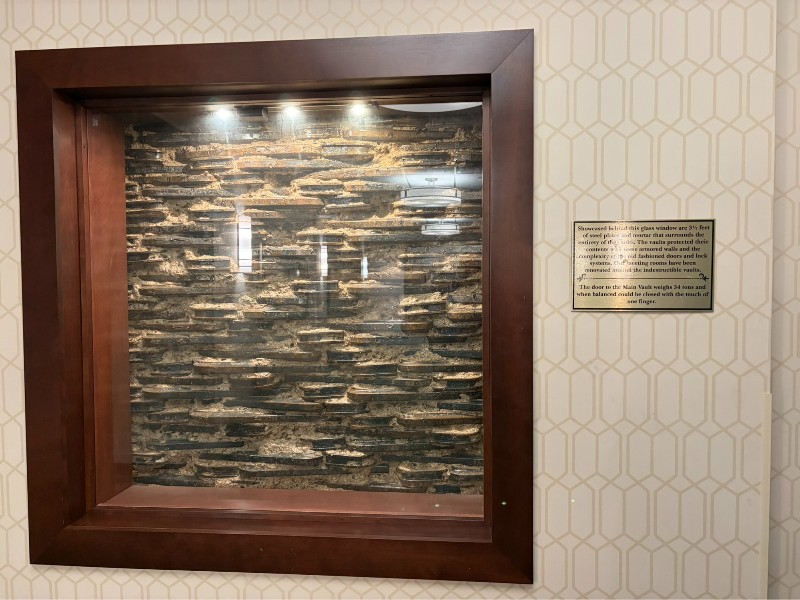 A view of the original vault walls. Credit: Sean Ring
The Main Vault door (which I’m leaning against in the above picture) weighs 34 tons. The Coin Vault next to it has its own armored door, locking gears, and combination dials the size of dinner plates.
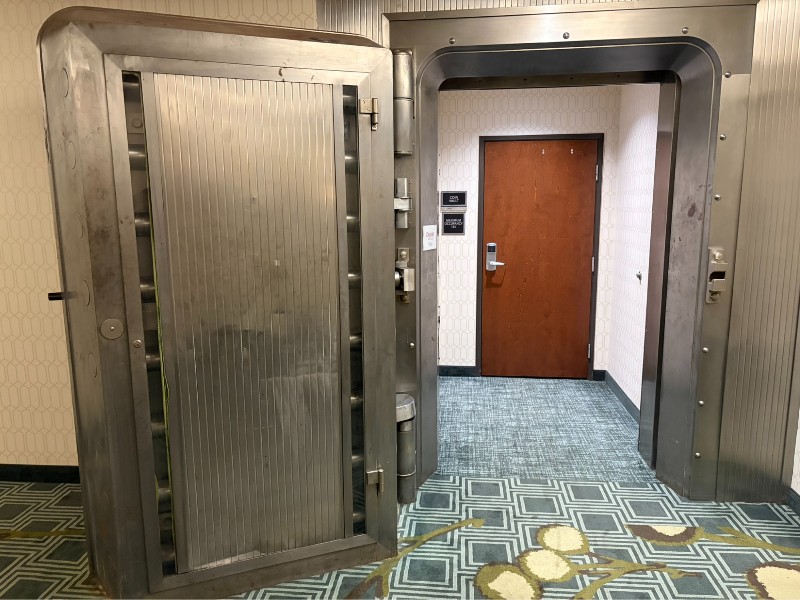 The Coin Vault. Credit: Sean Ring
Upstairs, Near the vault doors, stands a glass tube. Authorized personnel had to step inside it to pass. The tube weighed each person to the ounce, both coming and going, while guards checked credentials and purpose of visit.
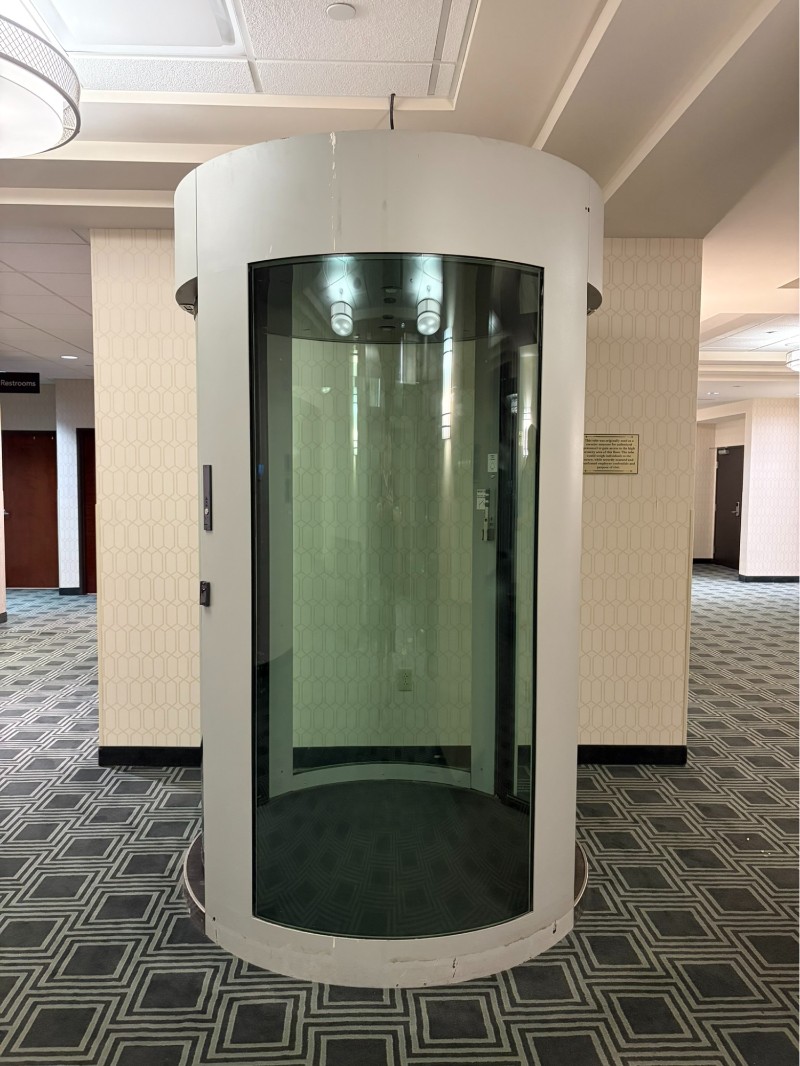 Credit: Sean Ring
You couldn't leave this building one ounce heavier than you entered it. Not with a gold coin in your sock. Not with a roll of quarters in your pocket.
And in case anyone got creative, the 8th floor housed a firing range where the bank's guards trained. Gun turrets still face the street outside. The pool and hot tub occupy the firing range now. The old guard booth is a valet stand.
Why They Built It
Why did anyone build this?
Because in 1931, money was real.
Gold coin. Silver certificates. Paper redeemable for metal. Bonds you could hold in your hand. Money was a physical thing, which meant it could be physically stolen. Torches, drills, and getaway cars were a real threat… because the money was real.
So the Fed answered with steel. Three and a half feet of it. The architecture told the truth: what's inside this building has value, and we know it.
Robbing the place was unthinkable.
The Money Left First
Then, piece by piece, the money stopped being money.
In 1933, FDR called in the gold. In 1971, Nixon shut the gold window, and the dollar's last tether to metal snapped. What remained was paper, and then not even that. Just entries in a database.
By 2008, the Fed could conjure up trillions without opening a single vault door. Quantitative easing needs no trucks, guards, or weighing tubes. It merely requires a keyboard.
So in 2012, the Pittsburgh branch closed. The Fed's remaining local staff moved into leased space in a nearby office tower.
The Fed traded its fortress for a rented floor because there was nothing left worth guarding.
The money it was supposed to guard stopped being money.
The Theft Moved Upstairs
When money was real, taking it required breaking in.
But when it became keystrokes, the taking didn't stop. It only changed form.
Nobody needs to crack a 34-ton door when new dollars can be created by the trillion and spent into the economy before your paycheck catches up. That's the Cantillon Effect, and we've covered how it feeds the people closest to the spigot.
A burglar has to break in. A central banker just types.
The old theft was a felony. The new one is policy. And no vault on earth protects you from it, because the money in your account gets lighter without ever leaving the room.
The weighing tube measured people to the ounce. Today, the dollar is weightless because it’s practically worthless.
Wrap Up
Real money needs a vault. Your gold coins need a safe. Allocated bullion sits behind steel somewhere, guarded, insured, and weighed. Things worth stealing get protected.
The dollar needs no vault. That tells you everything about what it's become.
So if business or pleasure ever brings you to Pittsburgh, stay the night at the old Fourth District. Eat breakfast in the marble banking room. Stand in the tube. Put your hand on the 34-ton door.
Then go home and check that your own vault holds something worth the steel.
The people who built this place would understand you perfectly.

A Crude Awakening
Posted October 23, 2026
By Sean Ring

All That Glitters Is Diesel
Posted October 22, 2026
By Sean Ring
Treason’s Greetings!
Posted October 21, 2026
By Sean Ring

Zach’s Second Opinion
Posted October 20, 2026
By Zach Scheidt

A COLA, But No Smile
Posted October 20, 2026
By Zach Scheidt