
Posted April 30, 2026

By Matt Badiali
The Coming Shale Fail
“Why aren’t the U.S. oil producers drilling more?” is a question I get a lot. The answer is both simple and complicated. It starts with Saudi Arabia and OPEC and ends here at home.
Frack This!
Back in the mid-2000’s, the U.S. petroleum engineers unlocked a secret to massive oil reserves. They cracked the “shale code.” It was an enigma we knew about for decades. Huge volumes of oil lay trapped in thin layers of rock that wouldn’t let it out.
Once the engineers figured out how to produce it, U.S. oil production skyrocketed. Those new flows of oil dramatically impacted U.S. imports:
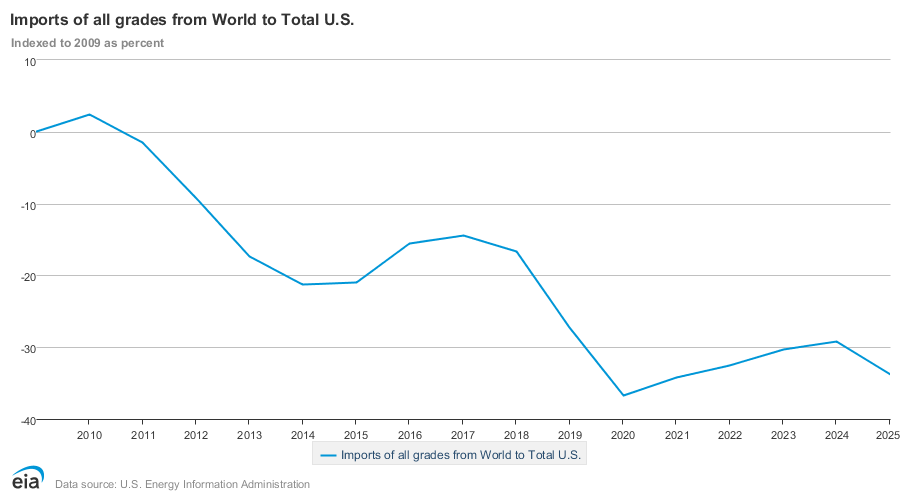
In 2009, the U.S. imported 3.4 billion barrels of oil. By 2020, that fell to 2.8 billion barrels.
OPEC exports took the brunt of that hit. The U.S. cut imports from the cartel from 1.6 billion barrels in 2009 to 280 million barrels in 2021. In 2015, the U.S. government lifted a 40-year-old ban on oil exports. Suddenly, the U.S. was a major competitor to OPEC on the world stage.
And that’s when the wheels came off.
OPEC Drops Its Hands
For decades, OPEC kept oil prices high by manipulating supply and demand. When oil prices fell too low, they would throttle down production to kick it back up again. But with the U.S. production coming on, OPEC had to cut…and cut again to keep prices up. And that meant they lost market share.
So…OPEC just stopped defending the price.
They knew the U.S. shale industry depended on massive capital inflows from private equity and bank lending. Shale wells are expensive to drill and complete. However, they’re relatively reliable producers. So, investors and banks would put up the capital, secured by the well’s oil production.
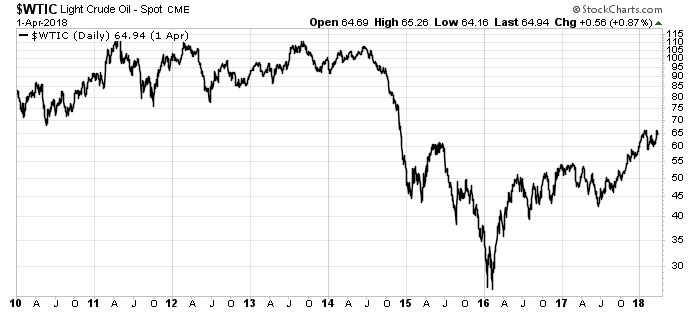
An average shale well in Texas cost about $8 million and produced about 80,000 barrels of oil in its first year (in 2016). At $120 per barrel, that well turned into a profit in the first year. At $100 per barrel, it paid for itself. Cut that oil price to $40 per barrel, and it took years to recover that capital.
And then OPEC let the oil price plunge to $20 per barrel.
It crushed the U.S. oil industry and its financial backers. Banks shut down all their oil lending. Private equity took a beating. And hundreds of companies went bankrupt.
It’s important to understand that, because it directly affects the U.S. oil industry today.
Today, companies have to drill wells on their own capital. They watch every nickel now (something that they didn’t do in 2016). And one of the big expenses is transportation.
One of the critical issues back then was pipeline capacity out of the Permian Basin in West Texas to accommodate all the crude oil. That means the oil price we see isn’t what the producers actually get. In 2018, shale producers lost $20 per barrel on transportation costs, compared to the official West Texas Intermediate price at Cushing, Oklahoma (WTI).
A Case of Indigestion
While that’s resolved, there is a new drag on prices – natural gas.
One reason we have so much natural gas in the U.S. is due to shale oil. Every barrel of oil produced in the Permian Basin comes with about 4 thousand cubic feet (4 MCF) of natural gas.
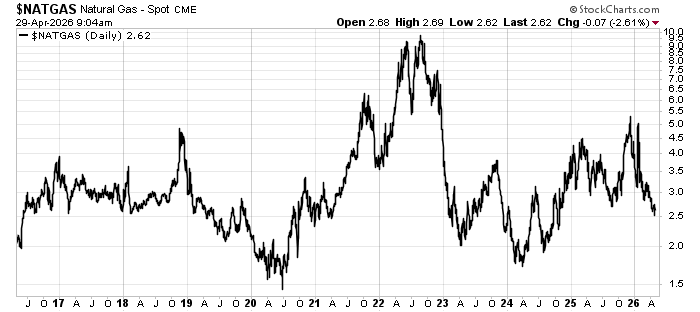
That creates a massive glut of natural gas because there isn’t enough takeaway capacity. Like oil prices, there are two distinct pricing regions. The main benchmark natural gas price is the Henry Hub:
However, oil producers in the Permian Basin don’t get that price. In fact, they pay for their natural gas.
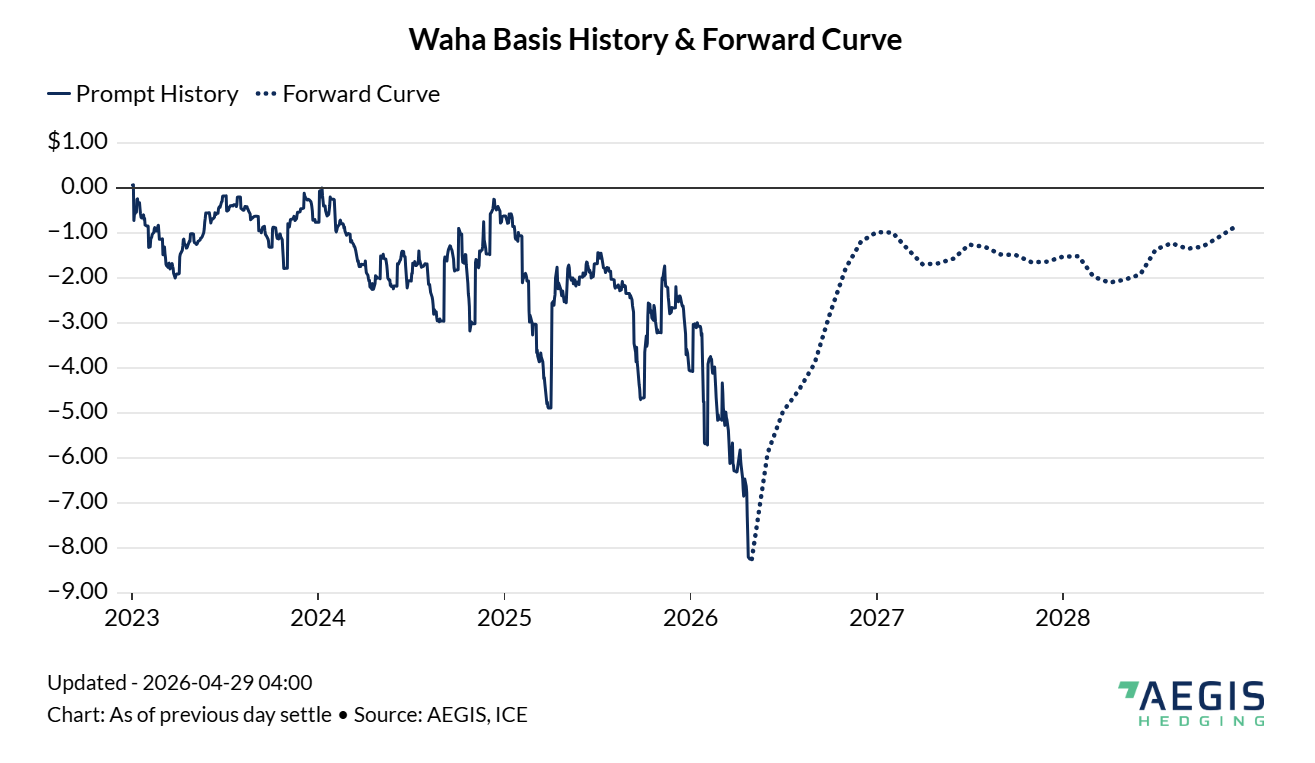
As you can see from the chart above, Permian Basin oil producers pay about $8.00 per MCF of natural gas. If the wells produce an average of 4 MCF per barrel, that means the oil producers lose $32 per barrel.
The current West Texas price for shale oil is around $103 per barrel. But the producers lose $32 per barrel. So, they net around $70 per barrel.
That’s also why U.S. natural gas prices remain so low. At some point, the value of natural gas will force the market to respond. The glut of natural gas has already drawn the attention of data center builders.
The Resolution
I spoke with my old friend and mentor, Cactus Schroeder of Chisholm Operating in Abilene, Texas. He told me that since my last visit, the town had a massive growth spurt.
The centerpiece is a massive 4-million-square-foot Stargate data center complex. The campus will house 10 to 20 data centers. Cheap land and cheaper power attracted the development.
That will help address the market disconnect in natural gas prices. But for now, oil companies aren’t drilling as much as we would expect. That natural gas price headwind will continue to dissuade investment until it gets figured out.

The Knowledge Problem
Posted May 25, 2026
By Sean Ring

The False Boom
Posted May 22, 2026
By Sean Ring

Who Ate the Seed Corn?
Posted May 21, 2026
By Sean Ring

The Ratchet Turns
Posted May 20, 2026
By Sean Ring

The War on Waiting
Posted May 19, 2026
By Sean Ring
