Posted July 06, 2026

By Matt Badiali
Silicon Valley Starts Underground
Mining billionaire Robert Friedland recently said,
“…every piece of technology—every electric vehicle, data center, robot, and AI supercomputer—begins in a mine."
Every data center, drone, missile, iPhone, Macbook, satellite, and AI server. Every single technology investors are chasing today…
It all starts life in a mine.
Not Your Mom’s Ceramics
Today, we’re focusing on high-tech ceramics. These materials are critical to everything from spaceships to next generation batteries, gas turbines, nuclear reactors, advanced high-power circuit boards, chip fabrication, hypersonic missiles, and the latest military drones.
These are not your simple clay ceramics. They are engineered materials that can withstand temperatures up to 5,400 degrees Fahrenheit. To put that in perspective, that’s twice the temperature of molten lava.
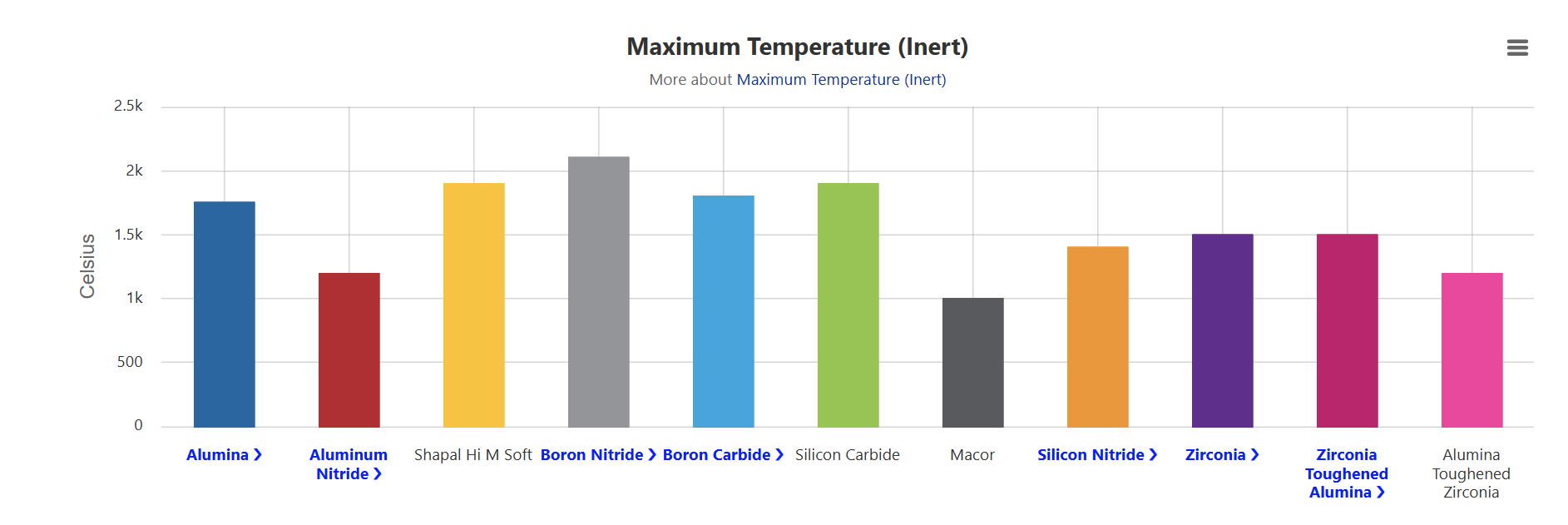
Common high-temperature ceramic materials include:
- Tantalum Carbide (TaC): One of the most heat-resistant materials known. Used in aerospace and high-temperature furnace components.
- Zirconia (ZrO₂): Resistant to high heat and extremely durable. It’s used for thermal barrier coatings on jet engine blades.
- Alumina (Al₂O₃): Extremely hard, heat resistant, with excellent electrical insulating properties.
- Silicon Carbide (SiC): Lightweight, heat resistant, extremely hard, and resistant to thermal shock.
- Boron Nitride (BN): Operates near 3632°F (2000°C) and offers a unique combination of excellent thermal conductivity and electrical insulation.
- Boron Carbide (BC): Hard, lightweight, and durable for ballistic protection.
These ceramics are engineered from borides, carbides, nitrides, and oxides of early transition metals. Transition metals include exotic metals like scandium, yttrium, titanium, zirconium, hafnium, vanadium, niobium, tantalum, chromium, molybdenum, tungsten, manganese, technetium, and rhenium.
The China Issue
You don’t just go out in the backyard and dig these metals up. Nearly all of them are on the critical minerals list. That’s because the U.S. has a severe supply shortage and relies on imports to meet demand.
In fact, the U.S. imports 100% of some of these metals, including tantalum, niobium, scandium, yttrium, and manganese. Unfortunately, China strictly controls these metals and dominates refining and processing.
Scandium and yttrium are on China’s “dual use” list of rare-earth metals. That means they have both commercial and military purposes. China strictly controls exports of metals for military use.
But non-dual-use metals are also subject to China’s strategic mineral regulations. That means China could shut down exports of these materials anytime.
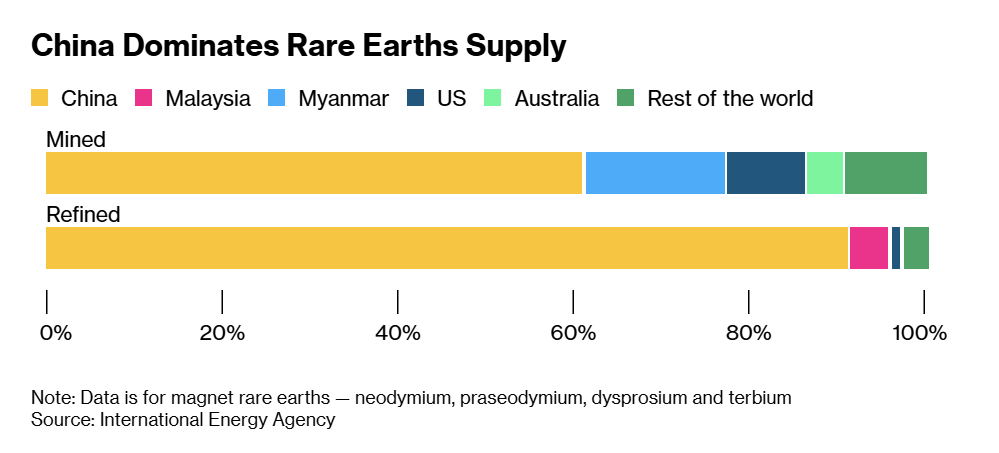
That matters because American ceramics makers must import these metals. They start with high-purity oxides… the exact stuff China is now restricting.
That’s why the U.S. government just approved refining plants on U.S. military bases. According to Bloomberg:
REalloys Inc., Titan Mining Corp., ioneer Ltd., and Energy X have reached agreements with the Pentagon to build facilities for processing rare earth minerals, graphite, lithium, and boron, the US Army said in a statement late Thursday [June 25th, 2026].
…
Last week, the Department of War’s Office of Strategic Capital extended a $725 million conditional loan to Energy Fuels Inc. and a $500 million loan to Phoenix Tailings Inc. Days later, Energy Fuels agreed to buy rare-earth magnet supplier Vacuumschmelze GmbH & Co. and associated companies for $1.9 billion, which will give it plants in Germany and Finland as well as a newly commissioned facility in South Carolina.
This federal intervention is why we need to buy and hold rare earth projects here in the U.S. There is a massive tailwind as the government tries to reshore an industry neglected for decades… in less than a year.
Wrap Up
As they say with construction projects: You can do it cheap, fast, and good. Pick two…
In this case, we are going to see fast and good, but not cheap. We need these metals for the high technology sector now. And because the requirements are so specific on purity, there is no halfway measure to save money. These metals need to be mined, refined, and delivered in the U.S.
That need will change these metals from simple mined commodities to a whole different category. I suspect that global prices won’t matter as much because the U.S. can’t import it. I can see a scenario where the domestic price is higher than the global price, simply because the U.S. military needs them.

The Market Nobody Ordered
Posted July 24, 2026
By Sean Ring

The Magic Pill’s Real Trick
Posted July 23, 2026
By Ray Blanco

Dead Cat Bounces
Posted July 22, 2026
By Sean Ring
Crude Lies
Posted July 21, 2026
By Matt Badiali
The SPR Boomerang
Posted July 20, 2026
By Zach Scheidt