Posted January 19, 2026
By Jim Rickards
Rickards on Venezuela
As readers know, Trump captured President Nicolás Maduro of Venezuela and his wife on January 3, in a flawlessly executed and lightning-fast attack on Maduro’s hiding place.
Within hours of the attack, Maduro was taken aboard the assault vessel U.S.S. Iwo Jima and was soon on his way to New York City. Within days, Maduro and his wife were arraigned in federal court. They are now in a federal detention center awaiting trial on charges of drug smuggling, money laundering, terrorism, and an array of other offenses.
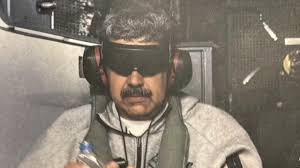 The operation to capture Venezuela's Nicolás Maduro and his wife involved more than 150 aircraft launched from 20 different military bases,
Maduro will get due process of law. One does not want to prejudge the case, but it’s quite clear that the U.S. has substantial evidence on Maduro and his wife. The expectation would be that they’d be found guilty and receive a long sentence, perhaps even a life sentence. Some of the charges may result in the death penalty.
The Consequences of Defying Trump
The takedown of Maduro is fascinating in numerous respects. The operation was months in planning. There was nothing rushed about it except the capture itself, which took about two hours. The preparation was meticulous, including a replica of Maduro’s residence built in Kentucky, which the U.S. Joint Special Operations Command (JSOC) used to practice the raid.
Trump’s new National Security Strategy (NSS) and the JSOC raid were developed in parallel. It was almost certainly the case that parts of the NSS were thinly veiled previews of what was about to happen to Maduro. Perhaps Maduro should have read it when it was released in November. There might still have been time to cut a deal.
An important aspect of the Maduro capture was that the White House insisted it was not a military operation. That claim seems hard to believe at first, considering the U.S. military deployed an armada off the coast of Venezuela and used helicopters, fighter jets, cyber-attacks, satellite surveillance, the Army’s Delta Force commandos, and other military assets to pull it off.
For the past month, the US has had the largest naval armada in history off the coast of Venezuela. Students consider the Spanish Armada in the late 16th century, Lord Nelson’s battles, the Battle of Midway, and the Battle of Leyte Gulf. These are all classic naval battles with large armadas of ships.
Yet, the amount of firepower and ships the U.S. had sitting off the coast of Venezuela was the largest concentration ever. It was led by the aircraft carrier USS Gerald R. Ford. The Ford is the first vessel in the new Ford class of aircraft carriers. The previous class of aircraft carrier was the Nimitz class, which was first deployed in 1968.
The Ford is the largest aircraft carrier in the world. And aircraft carriers do not travel alone. They travel with their own armada called an aircraft carrier task force, including destroyers, submarines, cruisers, and many other vessels. There were Coast Guard elements involved as well.
Simply An Arrest
Obviously, the U.S. had been putting pressure on Maduro for weeks before his capture. There were some negotiations between Trump and Maduro preceding his capture. Trump offered Maduro a reasonably good deal, including exile in Turkey and the ability to keep substantial assets. Maduro said no.
Maduro soon discovered the consequences of saying no to Trump.
Several Americans were wounded in the assault. One helicopter was shot at and hit but did not crash. No Americans were killed. The operation was a credit to our military.
But Trump labeled it a law enforcement operation. Maduro and his wife were under indictment for a variety of federal crimes. When the doors to Maduro’s compound were blown open, he was confronted by FBI and DEA agents as well as DOJ lawyers, read his Miranda warnings, served with an arrest warrant, placed in handcuffs, and taken to a federal criminal detention center. It actually was a law enforcement operation.
The White House said the military assets were used to protect law enforcement officers, not to wage war. That was a brilliant strategy because it disarmed the Democrat critics who said Trump violated the War Powers Act. Trump’s answer was that there was no violation because there was no war. It was simply an arrest, albeit the most elaborate one ever.
Global Repercussions Are Immense
The legal repercussions of the Venezuelan action will not stop with the arrests of Maduro and his wife. Venezuelan interests controlled the Smartmatic voting machine franchise that was suspected of being used to rig elections around the world, including the 2020 U.S. presidential election. The U.S. may finally have access to the evidence it needs to show that the election was rigged in favor of Joe Biden, with possible Venezuelan election interference.
In addition to the roles of law enforcement and the military, the CIA played an important role. The agency had assets inside Maduro’s compound who could monitor his whereabouts and even report when he ate, what he was wearing, and whether he had pets. That kind of human intelligence collection (HUMINT) is a nice change from the CIA's intelligence failures going back to WMD, Libya, Iraq, Afghanistan, and Russia's performance in the Ukraine war.
Maduro’s threat to U.S. national security is far broader than the specific crimes with which he is charged. Venezuela was a financial supporter of Hezbollah in Lebanon. Maduro offered opportunities for Russians and Iranians to set up surveillance operations aimed at the U.S., especially our southern border and Florida. Iran has outsourced much of its drone production to facilities in Venezuela.
China was seeking port access for its navy in the Caribbean, an almost unthinkable proposition that harks back to the Cuban Missile Crisis in 1962. As for Cuba, Venezuelan oil exports were almost its sole source of energy. These and many other threats arising in Venezuela are now over or are in the process of being terminated. Trump will ensure that these threats do not rise again by controlling any new administration in that country.
The repercussions of the Trump arrest of Maduro go far beyond Venezuela. There is not a dictator in the world who can sleep soundly tonight. They are all thinking, “If Trump can do this to Maduro, he can do it to me.” That does not mean Trump is about to go around the world snatching up dictators. It does mean Trump has greater leverage from now on in any negotiations or confrontations with their ilk.
Rearranging The Geopolitical Chessboard
Will Cuba be next on the list of countries that the U.S. takes over? Will Colombia get the same treatment as Maduro and Venezuela? Will Trump take overt steps to claim Greenland as U.S. territory? None of these moves is imminent, but the fact that they are even being considered shows just how much Trump has rearranged the geopolitical chessboard by his move in Venezuela.
Is A Mexican Invasion Next?
Among those who are reevaluating their relations with Trump and the U.S. are President Claudia Sheinbaum of Mexico, President Lula of Brazil, and the Ayatollah Khamenei in Iran.
Sheinbaum is a vassal of the drug cartels. The prospect of U.S. military action against Mexico is real. Trump may be expected to bomb Mexican drug labs and transshipment points.
Experts say, "Oh, the US would never invade Mexico." Really? The U.S. has made a habit of it. In the Mexican-American War of 1846 to 1848, the US Army and Marines landed in Veracruz, Mexico, on the Gulf of America, and then marched to Mexico City and forced the Mexicans to surrender.
Mexico and the U.S. signed the Treaty of Guadalupe Hidalgo, and the U.S. gained almost all of present-day Arizona, New Mexico, Colorado, Utah, and Nevada, and parts of Southern California and Wyoming.
In 1916-1917, General Black Jack Pershing invaded Mexico while chasing Pancho Villa, who had staged raids across the border into Texas. General Pershing was the last six-star general in the United States military. There have only been two six-star generals in U.S. history, George Washington and Black Jack Pershing. There are no five-star generals today. Pershing ended the incursions by Villa and others.
More recently, Mexico has staged an invasion of the United States under Biden's open border policy. Trump is not going to grab Sheinbaum in a Maduro-type raid, but he could attack drug facilities in Mexico. That should come as no surprise to investors.
Lula has been wrongfully persecuting Trump’s friend Jair Bolsonaro, the former president of Brazil. Ayatollah Khamenei has felt the brunt of B-2 bombers in Iran and is now facing a popular uprising. All of them will keep the Maduro precedent in mind in future dealings with the United States. The Iran situation is escalating by the day and could result in the U.S. military being deployed.
Trump’s Oil Strategy
While oil was not the only objective in effecting regime change in Venezuela, it is certainly an important one. The U.S. is the world's largest oil producer, surpassing both Russia and Saudi Arabia. Venezuela has the largest proven oil reserves of any country in the world.
The oil industry in Venezuela is decrepit due to corruption and neglect. Venezuela’s oil output is tiny relative to its reserves and its potential. The U.S. will rely on ExxonMobil, ConocoPhillips, and Chevron to invest in Venezuela (after receiving back all of their expropriated properties and oil concessions) and gradually move Venezuela back into the ranks of major producers. The combination of U.S. and Venezuela oil output in this scenario puts the U.S. in the position of a mini-OPEC with the capacity to set the world price of oil by increasing or decreasing output.
That’s powerful enough by itself, but the ripple effects are global. China depends on Venezuelan oil, along with imports from Saudi Arabia. The U.S. now controls the Panama Canal, which is a chokepoint for Venezuelan oil exports to China. To some extent, the U.S. could dictate the price and supply of oil to China. In turn, China would be more amenable to exporting rare earths to the U.S. in exchange for more favorable oil pricing.
The Communist regime in Cuba is utterly dependent on cheap Venezuelan oil. Trump will embargo the export of Venezuelan oil to Cuba, which could increase social unrest there. Using this channel, Trump may be able to achieve regime change in Cuba without invading and without firing a shot.
Likewise, the U.S. could threaten to lower the world price of oil to $25.00 per barrel. This would severely damage Russia’s energy-based economy and bring President Putin to make concessions to end the war in Ukraine, which he has so far been unwilling to do.
Russia doesn't need $100 oil. They don't even need $80 oil, but they do need $60 or $65 oil, which is where it's been. If Trump forces the price down to $25, Putin will agree to a lot more than he has so far and possibly end the war. The US could do that using Venezuelan oil plus U.S. oil as leverage.
With drill, baby drill, plus Venezuelan output, you don't actually have to force the price that low. You can just threaten to do it because you have the credibility. Putin doesn't want to see oil go that low. But now, you don't actually have to do it. You can just threaten to do it and very possibly get a good deal out of Russia in terms of ending the war in Ukraine.
Cheaper oil, driven by increased U.S. and Venezuelan output, could also solve the affordability crisis affecting everyday Americans. Slower inflation is not enough because it comes on top of the Biden regime's price increases. But $25.00 oil would produce deflation and actually lower prices across the board.
Oil prices affect not just the price of gas at the pump but also the price of everything, due to transportation costs. Diesel fuel and other energy costs are an input to everything. All the trucks, all the trains, and all the planes run on some kind of fuel, whether it's diesel fuel, jet fuel, kerosene, gasoline, refined products, or propane. They're all variations of oil and natural gas. Energy powers everything from factories and trucks to transportation and other manufacturing processes.
Deflation from lower energy costs would be enough to blunt the Democrats’ main talking point in the 2026 mid-term elections and save a Republican majority in the House of Representatives.
Countries directly affected by the U.S. strike on Venezuela include Cuba, Mexico, Russia, China, Ukraine, Iran, Brazil, Saudi Arabia, Taiwan, and many others. It’s difficult to conceive of a single action that could have had more widespread impact.

America First!
Posted March 03, 2026
By Sean Ring
WAR! What’s It Good For?
Posted March 02, 2026
By Sean Ring
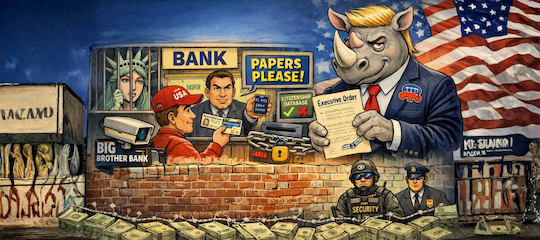
The Biggest RINO of Them All
Posted February 27, 2026
By Sean Ring

Sports, Predictions, and Morons
Posted February 26, 2026
By Sean Ring

SOTU or STFU?
Posted February 25, 2026
By Sean Ring