Posted January 15, 2026

By Sean Ring
Passing Notes to Avoid War
I’m really beginning to believe the Pentagon wants no part of getting bogged down in an unwinnable war in Iran.
Each branch of the USG communicates differently. The State Department has its minions write editorials in The New York Times for all the world’s diplomats to read. Likewise, the Pentagon leaks its stuff through The Washington Post.
The latest WaPo leaks are interesting, to say the least.
Days before protests erupted in Iran in late December, Israeli officials notified the Iranian leadership via Russia that they would not launch strikes against Iran if Israel were not attacked first. Iran responded through the Russian channel that it would also refrain from a preemptive attack, diplomats and regional officials with knowledge of the exchange said.
Why on earth would Israel do that? Will peace break out in the Middle East? Or, Zero Hedge speculates, did Iran really smack Israel in the mouth the last time and finally establish deterrence? Right now, your guess is as good as mine.
And for the icing on the cake, who did these notes pass through? None other than Russia! What a diplomatic coup!
I guess the Israelis didn’t trust the Israeli-Americans in the USG to play “telephone” correctly.
While these notes between the enemies were allegedly passed weeks ago, the West has only found out about them today. That’s apparently why oil is trading back under $60. The metals pulled back as well, but silver still trades above $91, gold above $4,600, and copper above $6.00, as I write at 6 am ET.
While most Americans would have a hard time believing Israel and Iran keep the back channels open, even if they’re through Russia, I don’t. Here’s why.
And make sure you’re sitting down for this.
The Oil That Wasn’t Supposed to Exist
There’s a strain of modern geopolitics that only makes sense once you accept a basic truth: what leaders say in public often has very little to do with what states do in private. Few stories capture that better than the clandestine Iran–Israel oil trade described by Daniel Ammann, and the trader who made it work, Marc Rich.
I can’t recommend The King of Oil enough. It reads like a spy novel.
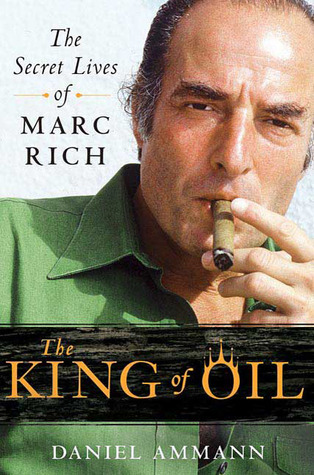
On paper, Iran and Israel were enemies. In reality, they were economically and strategically entangled. Rich built a fortune by exploiting that gap between public hostility and private necessity.
Enemies In Need Are Friends, Indeed?
After the 1950s, Israel found itself largely cut off from Arab oil. The Arab–Israeli conflict and the boycott left the country chronically vulnerable to energy. Survival required improvisation—and secrecy.
Under the Shah, Iran played a double game. Publicly, Tehran aligned itself with the Muslim world’s anti-Israel posture. Privately, it wanted Western markets, influence, and cash. Quiet cooperation with Israel solved all three problems, provided it stayed invisible.
That invisibility was the point.
The Secret Pipeline
Ammann describes a top-secret joint venture built in the 1960s: a pipeline running from Eilat on the Red Sea to Ashkelon on the Mediterranean. Iranian crude could flow into Israel and onward to Europe while both governments denied the trade existed.
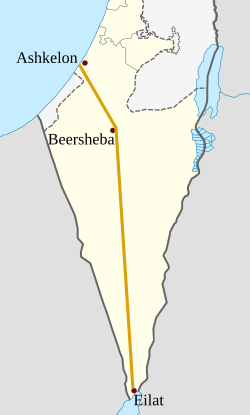
The pipeline became strategically priceless. When the Suez Canal closed and during periods of war, it offered Israel oil without public exposure. For Iran, it was shorter and cheaper than sending tankers around the Cape of Good Hope. Public enemies. Private partners.
Enter the Inevitably Named Marc Rich
At the time, Rich was a young trader at Philipp Brothers. He spotted what others were too cautious—or too constrained—to touch: politically radioactive oil that desperately needed a discreet middleman.
According to Ammann, Rich arranged contracts that moved Iranian crude through the hidden pipeline while disguising its origin on paper. Later, through his own firm, Marc Rich + Co, he expanded the playbook—complex shipping routes, careful documentation, cargoes that officially came from “neutral” sources rather than directly from Iran to Israel.
The oil moved. The paperwork lied. Everyone who mattered understood.
Embargo Law? Whatever...
During the Arab–Israeli wars of 1967 and 1973, and later after the 1979 Iranian revolution and U.S. embargo, open oil dealings with either side became politically toxic—and in the American case, legally restricted.
That’s why everything stayed covert.
Ammann portrays Rich as fully aware of the moral and legal ambiguity. He supplied Israel with critical oil during wartime. He delivered hard currency to Iran despite boycotts. And he argued—correctly, from a technical standpoint—that as a Swiss-based trader, U.S. embargo law didn’t bind Rich.
It was a calculation that ultimately cost him.
Did Rich Save Two Countries With One Deal?
For Israel, the arrangement was an energy lifeline when Arab producers tried to choke off supply. Years later, Israeli officials and intelligence figures openly acknowledged a profound debt of gratitude to Rich for keeping the oil flowing when it mattered most.
For Iran, the trade monetized crude that might otherwise have been stranded. For Rich himself, it was the foundation of a reputation—and a fortune—built on going where others wouldn’t. Secrecy wasn’t a side effect of the business. It was the business model.
Wrap Up
The story Ammann tells in The King of Oil isn’t just about one trader or one pipeline. It’s about how the world actually works. Ideology is deafening, but energy is essential. And when survival is on the line, enemies cooperate, as long as nobody is watching.
Marc Rich didn’t create that reality. He simply learned how to profit from it.
Even today, Iran and Israel pass notes from an old playbook.

America First!
Posted March 03, 2026
By Sean Ring

WAR! What’s It Good For?
Posted March 02, 2026
By Sean Ring
The Biggest RINO of Them All
Posted February 27, 2026
By Sean Ring

Sports, Predictions, and Morons
Posted February 26, 2026
By Sean Ring

SOTU or STFU?
Posted February 25, 2026
By Sean Ring