Posted May 26, 2022

By Sean Ring
It Ain’t Over ‘Til The Plutocrat Goes Splat
- The markets have turned up, partly because the downturn needed a rest…
- …and partly because yields have fallen.
- The danger is the Fed stops their inflation work here, falsely thinking the threat has passed.
Good morning on this fine Tuesday!
Man, it’s brisk here in Northern Italy. It’s more akin to a November morning than a late May one.
I had to break out my fleece for my morning constitutional!
And speaking of cold, the headline of this piece may seem a bit, well, “aggressive” even for this newsletter.
So let me dispel something.
In 1929, brokers and investors didn’t jump out of windows in droves.
It was a lie that became a part of the American mythos.
John Kenneth Galbraith wrote about this very thing in his book, The Great Crash, 1929:
In the United States, the suicide wave that followed the stock market crash is also part of the legend of 1929.
In fact, there were none.
For several years before 1929, the suicide rate had been gradually rising.
It continued to increase in that year, with a further and much sharper increase in 1930, 1931, and 1932 ...
The statistics for New Yorkers, who might be assumed to have had a special propensity for self-destruction derived from their special propinquity to the market, show only a slight deviation from those of the country as a whole.
And why am I using the term “plutocrat”?
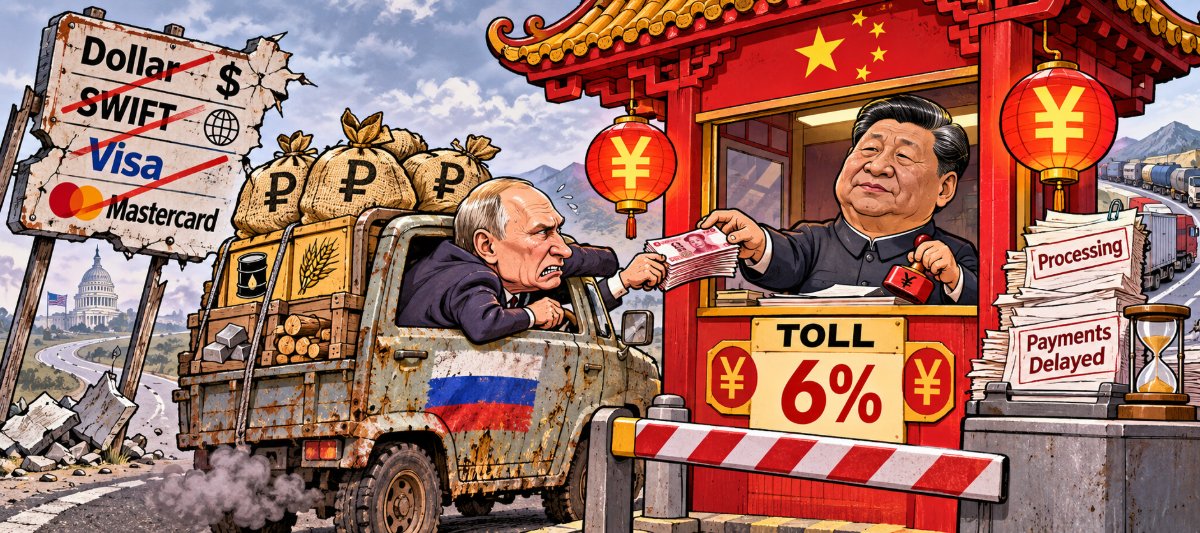
Well, “oligarch” has been reserved for Russians.
So we’ll go with plutocrat, a synonym without the nationalistic flavor.
They, too, derive their power from their wealth.
Here’s my theory.
The Fed will not have done its job of quelling inflation and the accompanying malinvestment until we have some plutocratic bankruptcies.
That is, we need to get the plutocrats to feel financial pain.
When that finally happens, the Fed can take pride in a job well done!
(Albeit, it’ll be far too late on a reckless expansionary policy it only has itself to blame).
The Here and Now
The risk now is that the Fed eases up on its hiking policy.
I know. Chairman Powell still says it’s full speed ahead.
But I’m not sure the markets believe him anymore.
I won’t inundate you with charts in this Rude.
Our monthly asset class report is due tomorrow.
But the US 10-year yield has failed at the 3% level.
That means the market doesn’t think the Fed’s hikes will extend that far.
(Currently, the upper bound on the Fed Funds rate is 1.00%.)
Thanks to rates stalling, the US Dollar Index has fallen from an intraday high of 105.07 to 101.70.
The always level-headed JC Parets of All Star Charts wrote this morning:
-
- Next week will mark 16-months since the New highs list peaked
-
- The Energy sector is up 61% this year. And we're not even in June yet
-
- Consumer Discretionary is the worst performer this year down over 24%
-
- Natural Gas has doubled in a just a few months and up 500% the last couple years
-
- The US Dollar Index is hitting new 1-month lows and no one is talking about it
-
- Bonds stopped crashing, and stocks have since then stabilized
-
- Sentiment Readings are near historic bearish extremes
-
- $ARKK, Biotech, Chinese Internet & IPO Index all made higher lows this month
-
- US 10-year Yield failed once again to hold above 3%
-
- ETH prices fell 8 weeks in a row. 9 in a row for BTC (most ever)
-
- S&P500 is holding above key support of 4100
-
- Bitcoin is holding above key support of 29000
-
- $SPY $QQQ $DJIA & $TRAN never got oversold over the past 2 months, which is historically evidence of an uptrend for stocks, not a downtrend.
For these reasons, he’s bullish on the SPX.
In my report tomorrow, I’ll show he’s probably right in the short term.
And that’s what scares me…
We haven’t had enough pain yet in the upper echelon of society.
But the pain they need isn’t higher taxation…
It’s a loss of paper wealth.
Why Higher Taxes on the Rich Aren’t the Answer, Warren…
I can’t stand Warren Buffett when he talks about taxes.
He sounds like a radio advertisement for the IRS.
Gee, Warren, if your secretary pays a higher tax rate than you, spring for a better accountant.
Begging for higher taxes on the plutocrats isn’t the answer.
Because plutocrats like Buffett have armies of accountants to reduce their tax bills legally.
And newer plutocrats don’t take capital gains because they employ the “buy, borrow, die” strategy.
From The Wall Street Journal:
For borrowers, the calculation is clear: If an asset appreciates faster than the interest rate on the loan, they come out ahead.
And under current law, investors and their heirs don’t pay income taxes unless their shares are sold.
The assets may be subject to estate taxes, but heirs pay capital-gains taxes only when they sell and only on gains since the prior owner’s death.
The more they can borrow, the longer they can hold appreciating assets. And the longer they hold, the bigger the tax savings.
This is why the correct answer to this puzzle is falling asset prices.
The Answer is Deeply Discounted Asset Prices
Unless and until the Fed goes through with its hiking cycle - and I mean getting interest rates back to normal - our economic issues won’t go away.
And by economic issues, I mean ludicrous inflation and meandering growth.
Ordinary people are having a more challenging time affording life’s necessities.
As seen on LinkedIn today:

Oil, gasoline, diesel, natural gas, corn, wheat, soy… the list goes on of costly tangible goods.
When food and energy rocket for a long enough time, you see civil unrest.
We’re already seeing that in many parts of the world.
To make sure this stops, the Fed must continue to hike rates - and make sure that investors believe it will continue to hike rates.
The economic pain for the rich will be enormous.
But that’s the price the Fed (and the rest of the world’s central banks) must pay to quell the coming insurrection.
Wrap Up
The last thing we need is higher taxation.
We need the Fed to follow through, and in a way the market knows the Fed will follow through.
With that said, if the Fed continues to hike to a neutral level (currently pegged at 2.5%), I don’t think that will be enough.
The Fed has to exceed 2.5% to bring asset prices down to a level where the rich must repay their margin loans.
Yes, that will have a cascading effect on asset prices.
But that’s the medicine we need to clear up all the economy’s malinvestments.
Tomorrow, I’ll back up this little Rude with charts for our monthly asset class report.
See you then!
All the best,
Sean

The Market Doesn't Check Your Birth Certificate
Posted November 13, 2026
By Sean Ring

Jensen Huangs Himself
Posted November 12, 2026
By Sean Ring
The Christmas Credit Hangover
Posted November 11, 2026
By Zach Scheidt
Cash Isn’t Cowardice
Posted November 10, 2026
By Sean Ring

Be the House
Posted November 09, 2026
By Sean Ring