Posted September 04, 2025

By Sean Ring
Google’s Great Escape
As I basked in the reflected glory of my gold and silver mining stocks rallying hard yesterday, I decided to walk away from my screen to enjoy a scrumptious dinner that Pam had prepared.
The great thing about having an Asian wife who can cook Asian dishes is that I get a variety of food here in Italy that most people don’t. After all, who wants to eat Thai, Filipino, Malay, or Singaporean dishes with all of Italy’s culinary glory surrounding us?
So Hokkien Mee it was, and my goodness, was it delicious! Hokkien Mee is a stir-fried noodle dish topped with shrimp, pork, and squid.
Once I scoffed up those great noodles, I gratefully headed back upstairs to see half my screen in the red! What on Earth was that all about?
Actually, it was simple: Google escaped the Justice Department's clutches and was allowed to keep its all-important Chrome browser. Its stock popped over 7%, while Apple, the other primary beneficiary of the decision, for about 20 billion reasons, was up 2.5%.
Capital drained from the miners and materials back into tech… though that’ll be short-lived.
What’s more permanent is Google’s win. Let me explain.
The Short of It
The Justice Department wanted to chop Google into little digital pieces. The judge handed them… a spoon.
That federal judge ruled that Google doesn’t have to sell off Chrome, the crown jewel of its internet empire. No forced breakup, no “Baby Googles,” no corporate Game of Thrones bloodletting. Instead, the ruling was more like a parental finger wag: share your toys, don’t hog the sandbox, and let some of my friends’ dorky kids sit at the cool kids’ table.
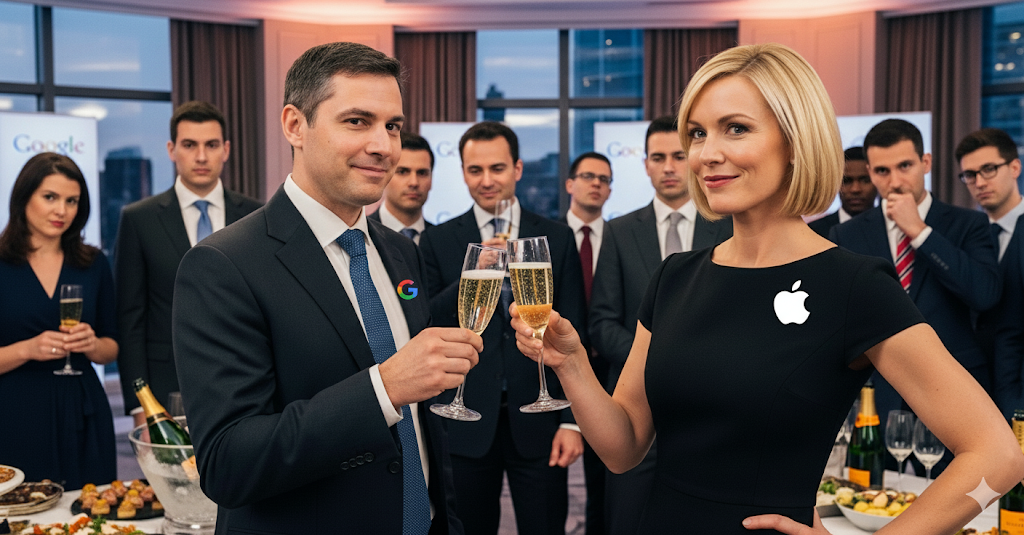
And if you’re Apple? Pop the champagne. As I mentioned, the iPhone’s money milking machine is still hooked up to Google’s technical teat.
Google Gets to Keep Chrome
For years, antitrust crusaders fantasized about the DOJ prying Chrome and Android away from Google like medieval torturers drew and quartered criminals. But Judge Amit Mehta wasn’t buying it. Google keeps Chrome, Android, and most of its empire intact.
Instead, the company must do three things:
- Share some search data with rivals. (Translation: competitors get crumbs, while Google still controls the buffet’s cook and cuts.)
- Offer syndication services. (So Bing and DuckDuckGo can play at being grownups, even if no one really cares anymore.)
- Ditch exclusive contracts. Google can still pay to be the default browser, but it can’t lock out all competition.
It’s a slap, not an execution. Google jumped over 7% more in relief than anything else. That’s Wall Street’s way of saying: “We thought they were going to take an arm and a leg. Turns out you just got a speeding ticket.”
Apple Laughs All the Way to the Bank
Now here’s where it gets juicy.
Apple has been pulling in a cool $20 billion a year (not a typo) from Google just for keeping its search engine as the iPhone’s default choice. That’s not a side hustle—it’s one of Apple’s fattest cash cows outside of iPhones themselves.
The ruling? It basically says: No exclusives, but yes, you can still write Apple a massive check.Apple doesn’t have to scramble for a new default engine. There’s no disruption to the service; no mess, billions just keep rolling in.
Apple stock popped 2.5% on the news. Which makes sense: when someone promises to keep wiring you $20 billion a year, you tend to puff out your chest.
The Wrist Slap Heard Round the World
For critics of Big Tech, this ruling stings. They wanted a Microsoft-in-the-90s moment, a grand dismantling. Instead, Google dodged the bullet and Apple got paid.
Think about it: Google retains the Chrome fortress. Apple keeps its sweet, sweet $20 billion worth of protection money. Rivals like DuckDuckGo get a bone tossed their way, and not much more.
It’s almost comical. Regulators promised to bring the hammer of justice. They delivered a foam mallet from a toy store.
Wrap Up
This whole saga proves one thing: The tech giants are playing chess while regulators are still learning checkers. After all, if regulators were good enough, they’d be working in the private sector.
Google dodged a breakup that would’ve reshaped the internet. Apple gets to keep collecting Google’s tribute like some kind of mafia boss in a brushed-aluminum suit.
Rivals? They get a shot at scraps, maybe a few more search clicks, but let’s be honest—most people will still tap the little “G” without thinking… unless AI genuinely produces more “Answer Engines” like Perplexity.
For investors, the message is clear: Big Tech may get slapped, but it rarely gets broken. And if the stock pops are anything to go by, the market’s betting these giants are more entrenched than ever.
So next time Washington threatens to break up Big Tech, just remember: the axe is heavy, and the executioner isn’t fit for purpose.

L'oro dell'Italia
Posted December 05, 2025
By Sean Ring

The Border Threat No One Saw Coming
Posted December 04, 2025
By Sean Ring

Beating Inflation by Following the Trend
Posted December 03, 2025
By Sean Ring

The Curious Case of the Disappearing Silver
Posted December 02, 2025
By Sean Ring

Silver Surfing... and Bonus Tickers!
Posted December 01, 2025
By Sean Ring
