Posted June 26, 2026

By Sean Ring
Dynamite Dolomites!
I haven’t written a Rude travel edition in ages, so I thought I’d break off my usual ranting on this fine summer Friday and give you something pleasant to look at.
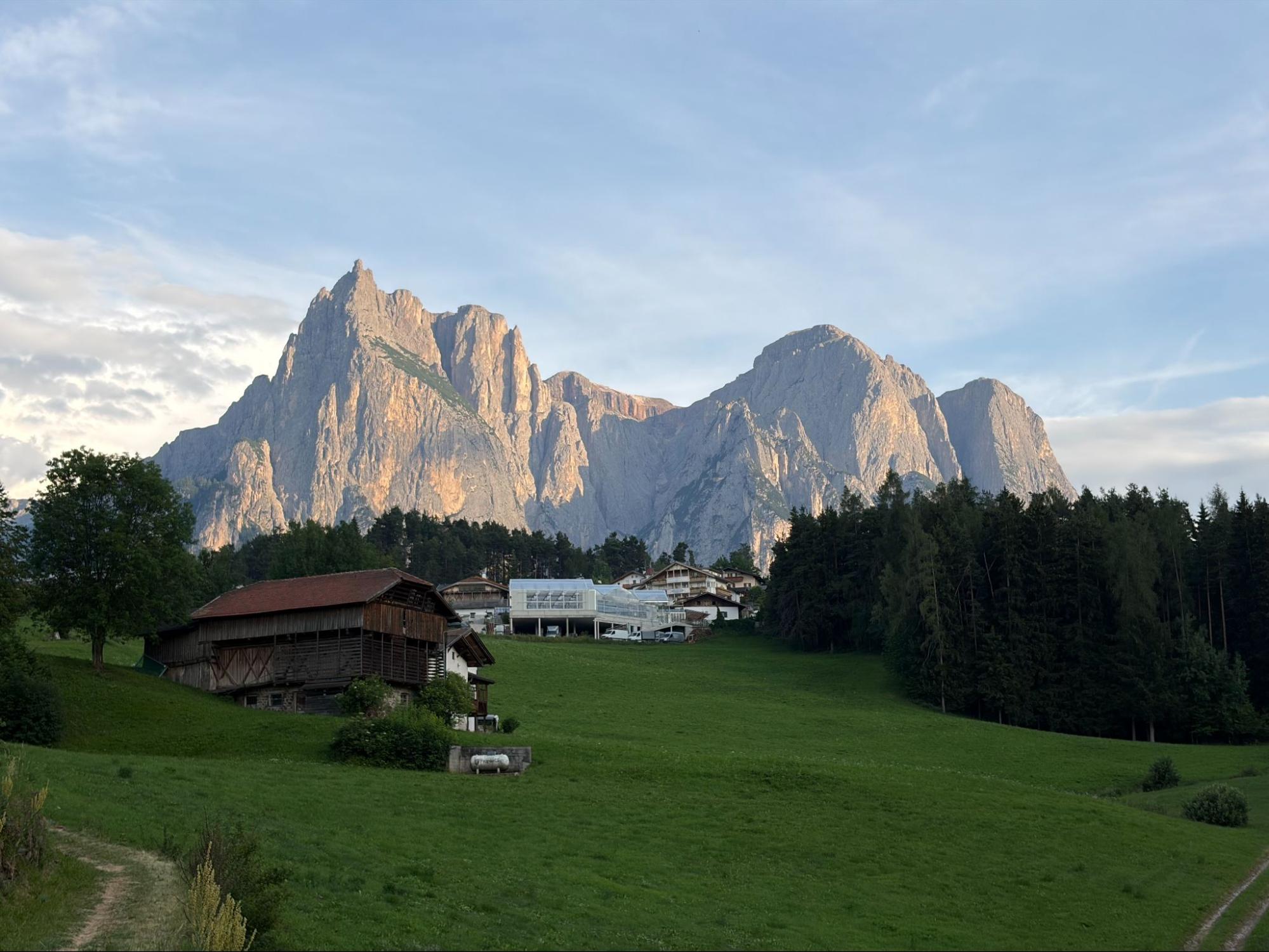 The Schlern/Sciliar massif, with the distinctive Santner Spitze on the left, seen from the Siusi/Seis–Alpe di Siusi area in the Dolomites. View from a hiking path near our hotel. Credit: Sean Ring
2025
Last year, Pam and Micah took a ride with Pam’s sister, Meg, and her husband, Kenneth, to the Dolomites while I was on a business trip. I was gutted I couldn’t join them, as Pam and I had been watching videos of travelers hiking and climbing these majestic rocks since we lived in the Philippines.
As I’ll be away in Riyadh, New York, and Pittsburgh teaching for most of July and August, we decided a quick getaway was in order. To make up for me missing the last trip, we packed up the car and drove the 4½ hours across the top of Italy to Trentino-Alto Adige, or as it’s more commonly known in English, South Tyrol.
How a Bit of Austria Wound Up in Italy
First, a brief history explaining why we get such outstanding beers, pretzels, and sausages in Northern Italy.
In 1915, the Entente powers struck a deal with Rome. If Italy joined their side, it would be rewarded with the southern part of Tyrol, including what is now South Tyrol, then a majority German-speaking region of the Austro-Hungarian Empire.
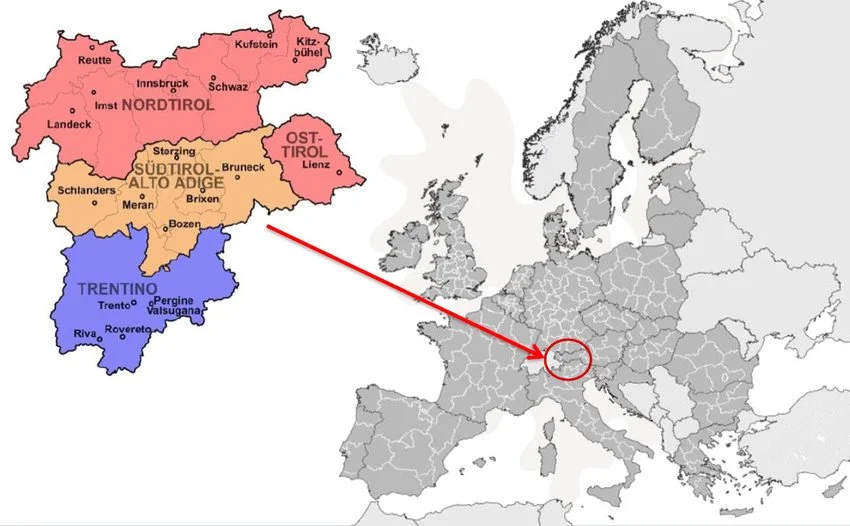 The former Austrian regions of South Tyrol (orange) and Trentino (blue) combined to form the Italian region of Trentino-Alto Adige. Credit: Alps & Meters
After the collapse of Austria-Hungary, Italian forces moved in. The Treaty of Saint-Germain in 1919 made the transfer official, despite the 1910 census showing more than 90% of South Tyroleans were German-speakers and Woodrow Wilson’s rhetoric about borders following national self-determination.
Annexation was followed by assimilation. Under Mussolini, Rome pushed a systematic Italianization of South Tyrol. German language and culture were suppressed, Italian migration into the region was encouraged, and the area was recast as a trophy of victory over Austria. That strategy locked South Tyrol firmly inside Italy, but it also sowed the seeds of a long, often bitter autonomy struggle.
After World War II, Vienna pushed for self-determination. The eventual compromise was a series of international agreements and autonomy statutes that kept South Tyrol in Italy but granted it robust self-government, generous fiscal autonomy, and strong protections for its German- and Ladin-speaking communities. And thank goodness for that, as the place is a fabulous fusion of European cultures.
Lunch in Trento
Since Trento was the first big city we reached, we decided to have lunch there. Pam and I once considered moving there when we were contemplating our move to Italy, but she preferred living closer to the French border than to the Austrian border. (She didn’t know the French like I do!)
Trento was born as Tridentum on a strategic Roman road through the Alps and later ruled for centuries as an episcopal principality under the Holy Roman Empire.
The city was once the stage on which the future of European Christianity was hammered out. From 1545 to 1563, bishops and theologians from across Europe gathered here for the Council of Trent. They turned this small outpost into a temporary capital of Christendom and launched the Catholic Counter-Reformation that shaped doctrine, liturgy, and church discipline for centuries.
Today, Trento is one of Italy’s wealthier and more cosmopolitan small cities. Merely getting a coffee takes you past two millennia of power, faith, and trade etched into stone.
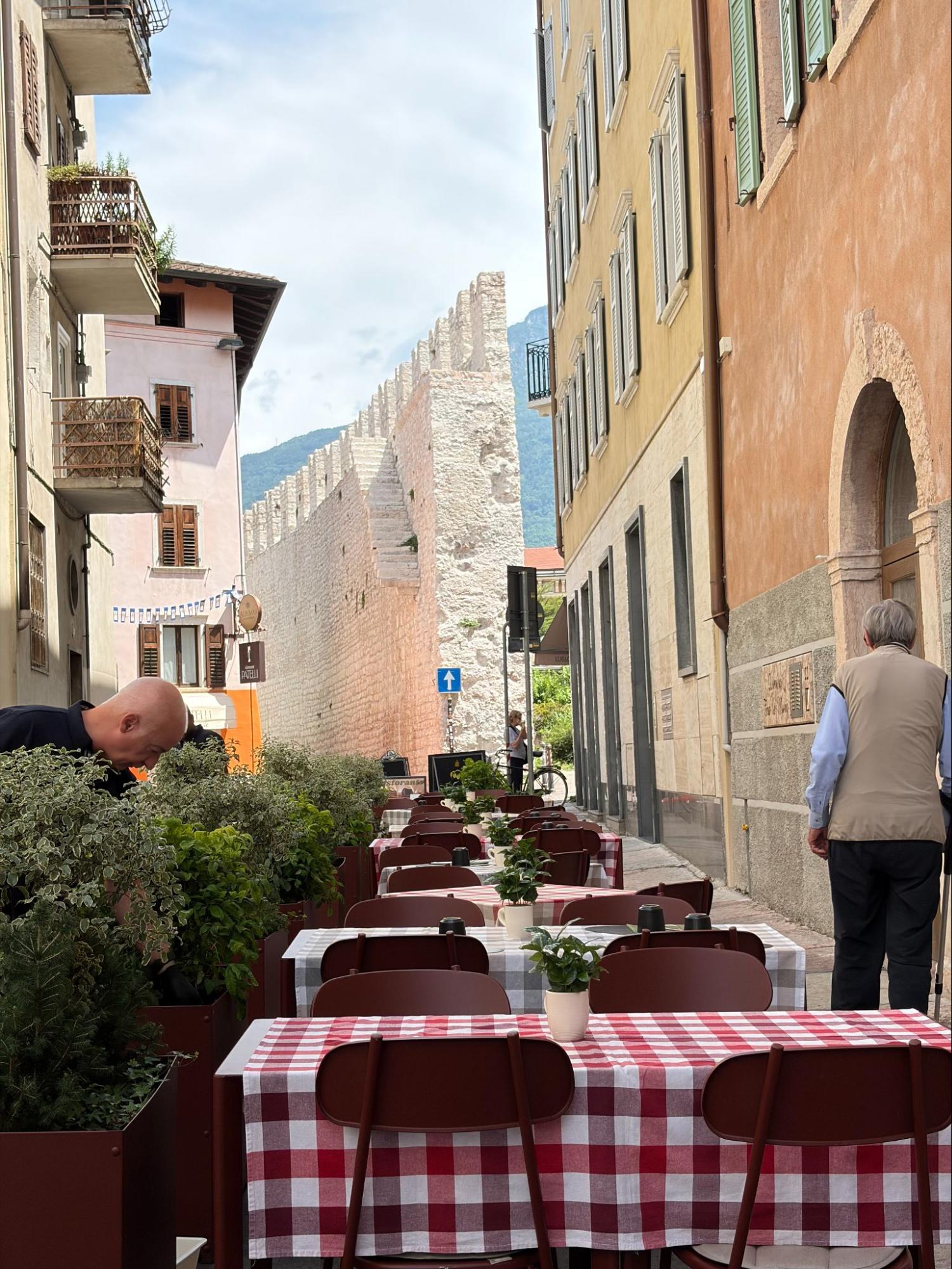 Oh, I just turned around at lunch and noticed Trento’s pristine city wall. Credit: Sean Ring
For me, though, the best part was ordering what the Brits would call “bangers and mash.” Except this version came with Austrian sausage, Italian potatoes, and the best sauerkraut I’ve tasted in decades. And though Micah ordered the steak, he loved my sauerkraut… and he’s a notoriously finicky eater.
Before I proceed, let me show you a map of our travels so you can get your bearings.
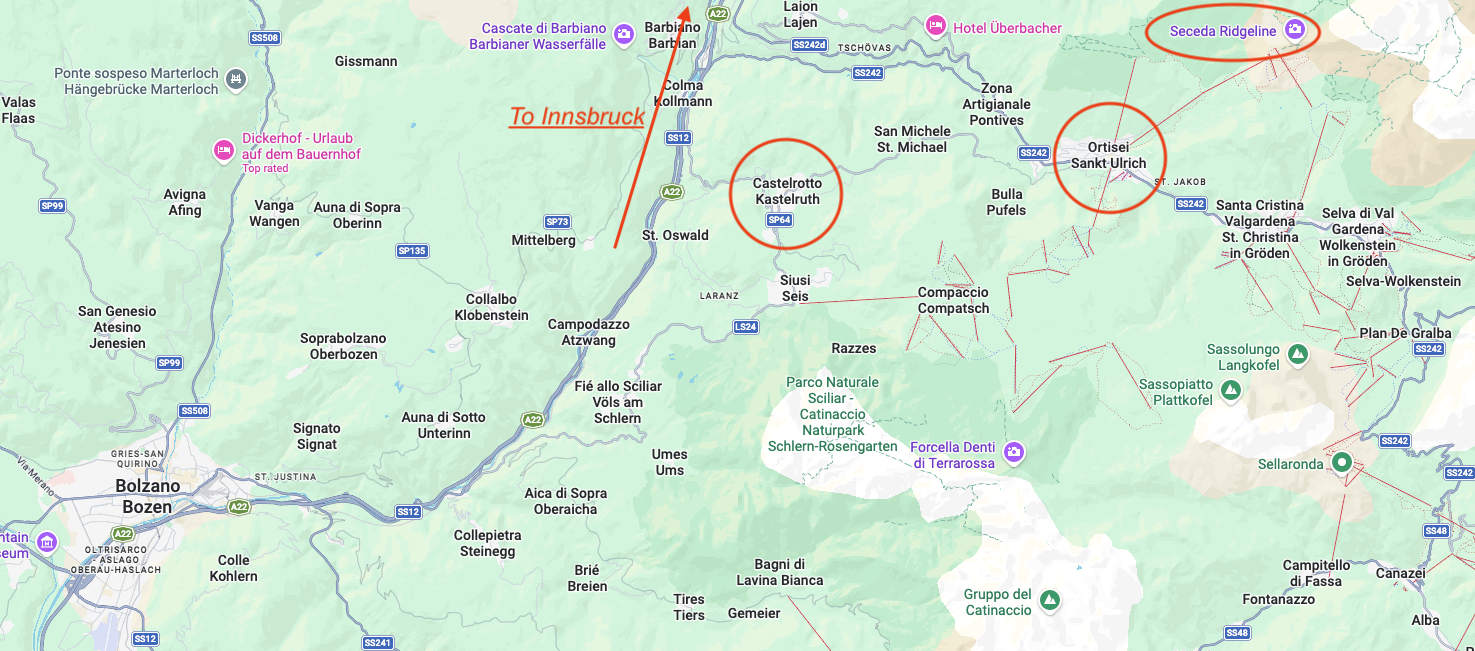
Staying in Kastelruth/Castelrotto
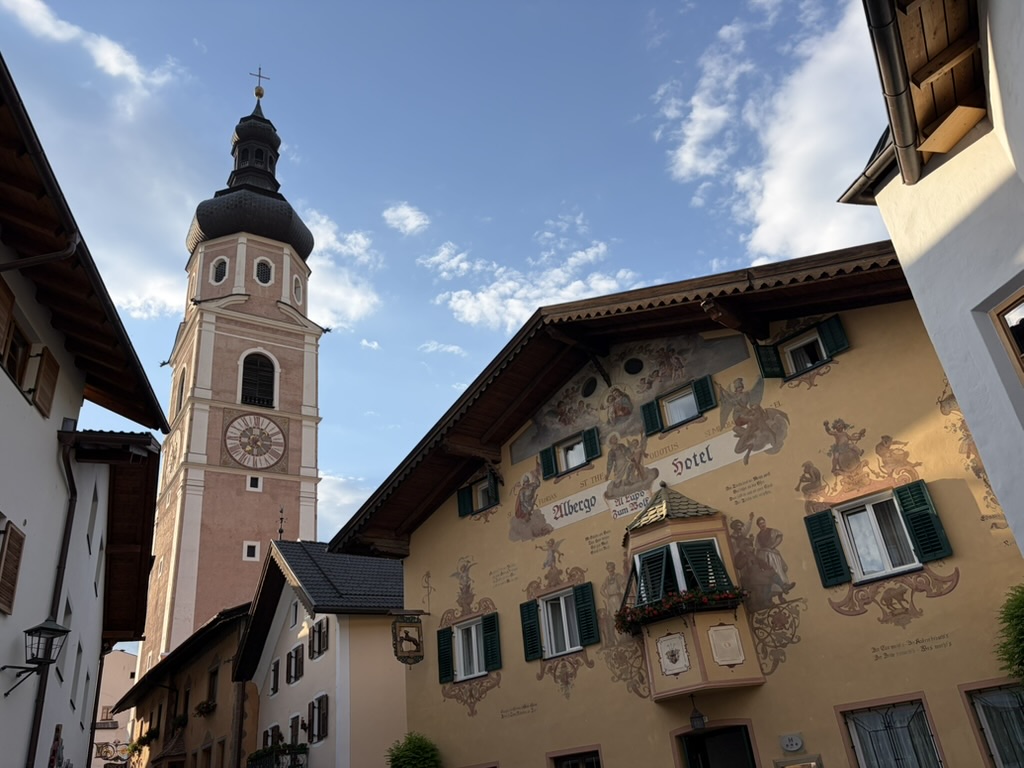 The center of Kastelruth. Credit: Sean Ring
Once we left Trento, we headed up the autostrada, past Bolzano. Then we had to get onto the mountain roads, where one slip of the wheel will send you off a cliff. Since the Austro-Italians have the German gene for engineering, the roads are fabulous, if a bit curvy.
Driving on the road to Kastelruth was exhilarating and scenic. Vivaldi was blaring on the sound system, adding an audio feast to our visual buffet. There’s nothing quite like listening to the Red Priest while you’re bobbing and weaving your way through the Dolomites. Le Quattro Stagioni ain’t just a pizza!
After we settled at the hotel, we headed into town for a lovely dinner. I ate goulash, which was certainly inherited from the Austro-Hungarian empire days. And my goodness, it was even better than the one I ate in Budapest. I’ve noticed any foreign food made with Italian meat just tastes better. For instance, Pam’s pork adobo is miles better here than in the Philippines. The recipe is the same. The only difference is Italy’s famed animal husbandry.
The next day, I would finally get what I came for: a live view of Seceda.
Climbing Monte Seceda
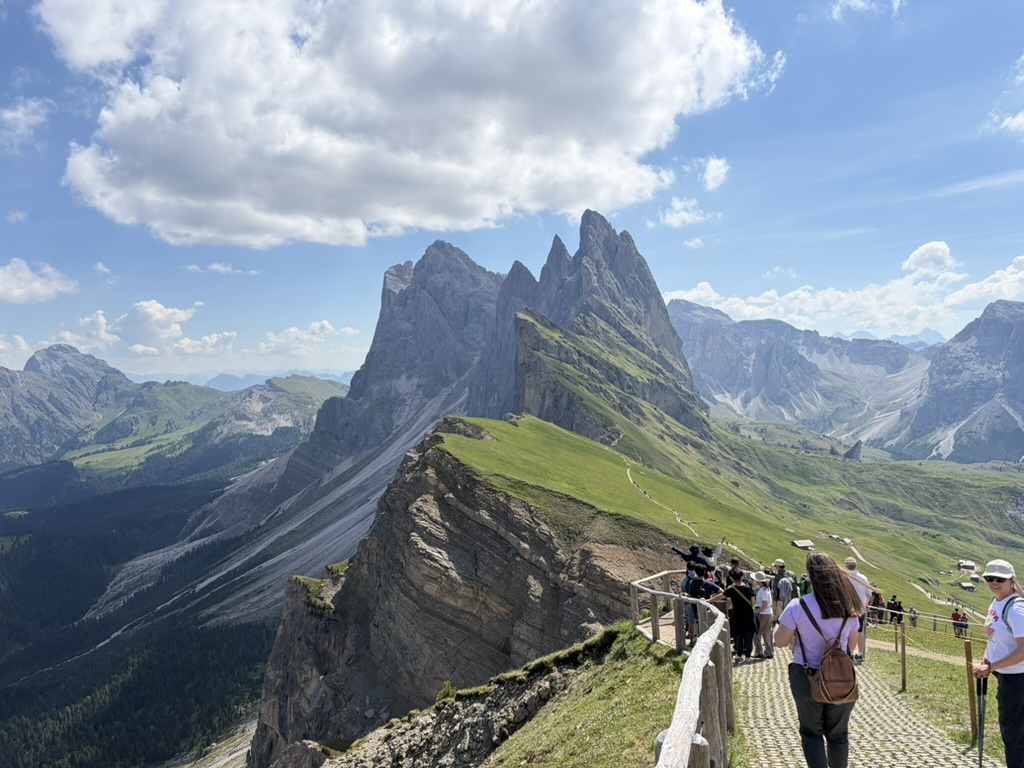 Apologies, but none of the pictures I took of Seceda does its majesty any justice. Credit: Sean Ring
Pam, Micah, and I watched all of Rick Steves’ travel videos on YouTube. He’s such an entertaining and engaging host, and his grasp of Europe is rare among Americans. His video on the Dolomites might be my favorite. Seeing him walk along the grassy ridge on Seceda gave me the impetus to go there.
But one thing Rick left out was how steep the climbs were! And we brought our dog, Rogue, with us. Though he was remarkably well behaved, Rogue nearly dragged me down the mountain a few times.
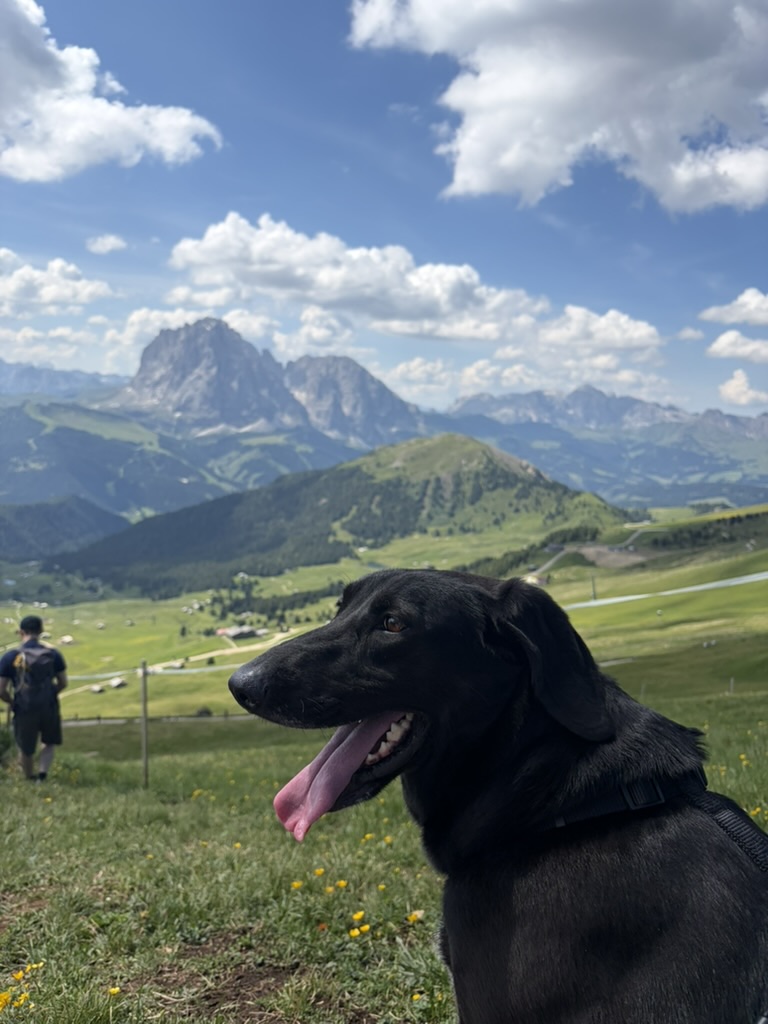 Rogue, the family dog, panting on Seceda. Credit: Sean Ring
And while we were dressed in our climbing clothes, the Asian ladies who were there were dressed to the nines! Hats, long flowing dresses, and heels… on a mountain! You’d think they were at Ascot with the Royal Family. I felt terribly underdressed, but Pam thought nothing of it.
I can’t recommend coming to this mountain enough. But one last thing, just taking the cable car up cost us 199 euros. Be ready for some pricey views.
Lunch in Innsbruck, Austria
After an exhausting day on Seceda, we decided to head over the Austrian border to Innsbruck. It’s another city I’ve waited forever to visit, and it didn’t disappoint. Between the lovely architecture and the fantastic food, we had a great time.
Innsbruck is the city where the Habsburg dynasty grew rapidly, thanks to people like Jakob Fugger. Fugger financed the Habsburgs' ambitions, particularly those of Emperor Maximilian I, who is buried in this city.
I’ve written about the Medieval Magnate before here in the Rude. Seeing a street named after him was a historical treat.
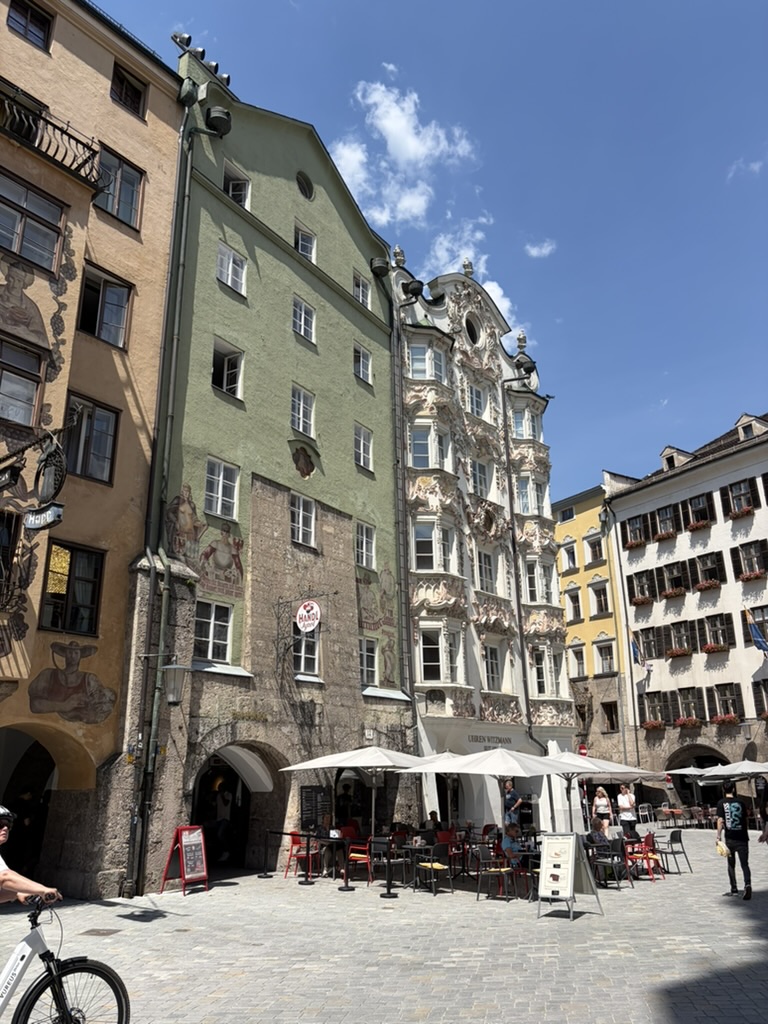 A square in the Old Town of Innsbruck. Credit: Sean Ring
Innsbruck is a famous ski resort in the winter. I’d like to visit during that season, as well.
A Dinner in St. Ulrich/Ortisei
Finally, we reached St. Ulrich, a lovely town that reminds me of Chamonix in France. Since the 17th century, a large part of its population has been engaged in woodcarving, sacred sculpture, altar-building, and the wooden toy industry. And boy, do they charge for it!
Only 10% of St. Ulrich’s population speaks Italian. The vast majority speaks Ladin, a Romance language common among the Ladin peoples of the Dolomites.
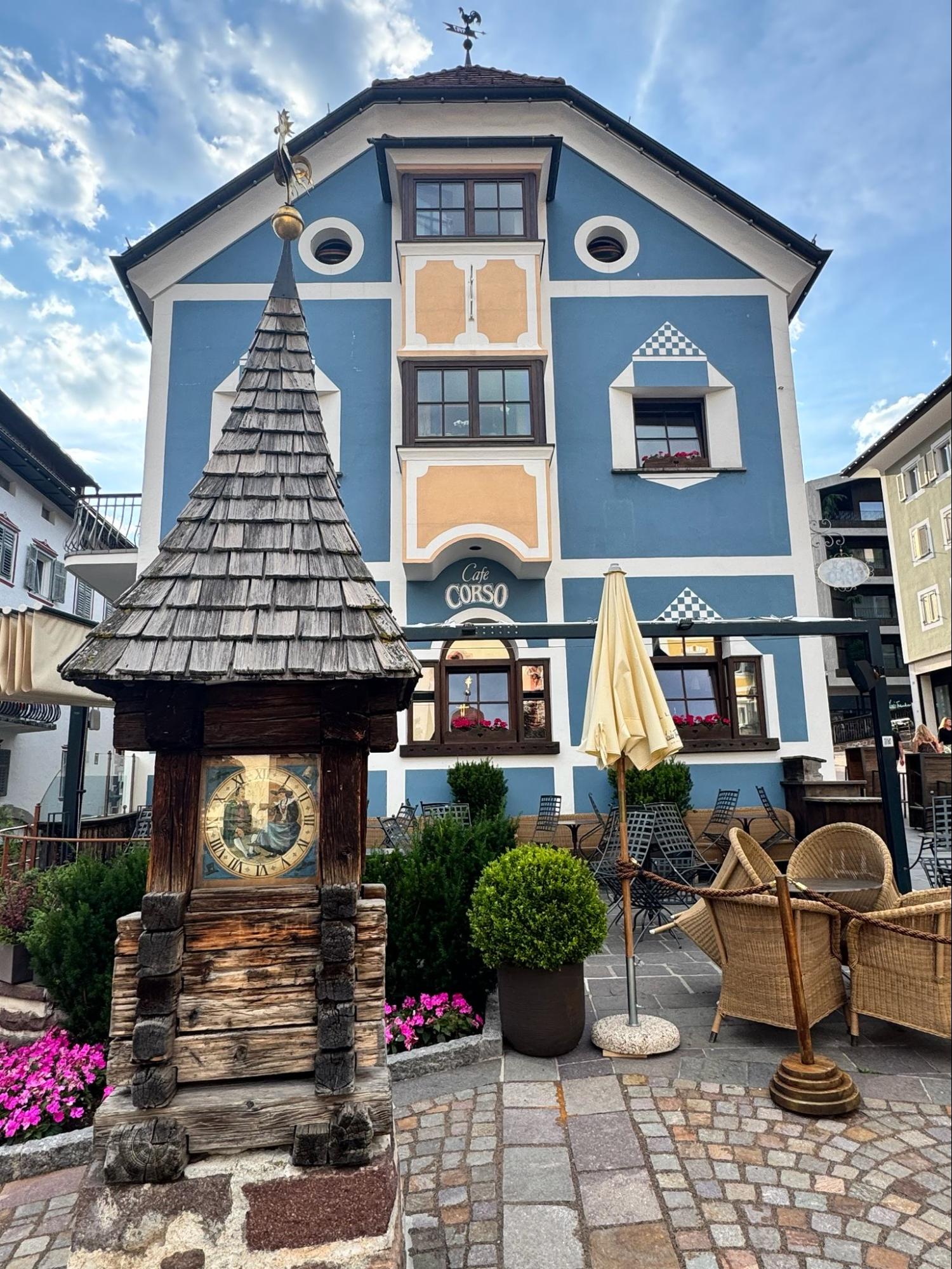 A colorful house on the square in St. Ulrich. Credit: Pam Ring
Nestled in the Val Gardena, St. Ulrich is a lovely village. We just walked around a bit here. And then ate a fabulous dinner. This time I ate casarecce with venison ragu. Bambi never tasted so good!
Wrap Up
I hope you enjoyed a Friday’s indulgence. Writing about this trip was almost as fun as walking it. Taking a trip to this amazing place is absolutely worth your while.
Have an amazing, restful weekend.

Broken Window Press
Posted June 25, 2026
By Sean Ring

The Skunk at the Garden Party
Posted June 24, 2026
By Sean Ring
Black Box State
Posted June 23, 2026
By Sean Ring
Financial Fathers
Posted June 19, 2026
By Sean Ring
The Fed's Cold Turkey
Posted June 18, 2026
By Sean Ring