
Posted November 16, 2026

By Enrique Abeyta
Don't Leave Your Kid's $1,000 in the Swamp!
Today, I’m giving Seanie the day off and taking over the Rude.
With only 45 days left in the year, you need to absorb this important information. I’m not exaggerating when I tell you it affects your children’s and grandchildren’s futures.
Here at Paradigm Press, we’re always looking for smart, practical ways to help you build wealth. And not just for you, but for the next generation.
For years, the conversation around saving for your kids was straightforward. Open a 529 plan, contribute what you can, and hope it grows enough to cover the rising cost of college.
That was it. One lane. One tool.
But today, a wave of new financial products, policy changes, and technology-driven platforms have dramatically expanded the potential number of weapons at your disposal.
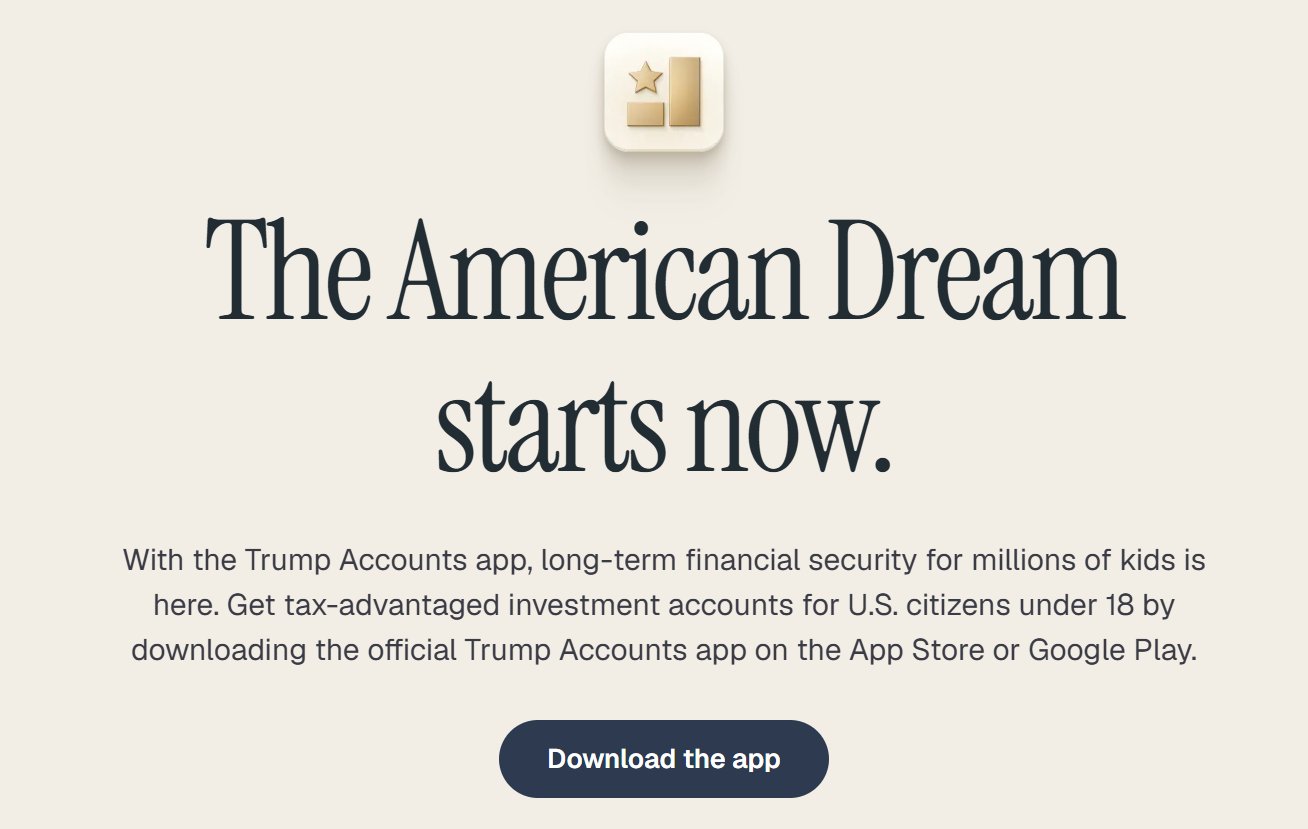
Perhaps the biggest development is the introduction of “Trump Accounts,” a new type of child-focused retirement account that fundamentally changes your long-term savings plan.
A New Head Start For Your Family
Trump Accounts went live on July 4th this year. They’re IRA-style investment accounts for American kids. Any child under 18 with a Social Security number can have one.
Kids born between January 1, 2025, and December 31, 2028, also get a one-time $1,000 deposit from the Treasury. There’s no income test. A family earning $30,000 gets the same $1,000 as a family earning $3 million.
Robinhood built the official app with BNY Mellon and serves as the program’s broker and trustee. The money goes into low-cost U.S. stock index funds, with fees capped at 0.10% a year.
So, how does the $1,000 work?
Here’s the most important part. After the opening frenzy, sign-ups stalled. So on October 1st, the Treasury opened accounts for tens of millions of kids on its own.
But it can’t request the $1,000 deposit for you.A parent or guardian must elect it by filing IRS Form 4547 through the app, the website, or their IRS online account. Until a parent claims the account, no money gets deposited.
Parents can download the app and claim the $1,000 here.
After that, parents, grandparents, and employers can add up to $5,000 combined per year. Employers can chip in up to $2,500 of the $5,000. (More on that later.)
The Treasury’s $1,000 doesn’t count against the cap. Dozens of companies, from BNY to Nasdaq, now match the government’s $1,000 for their workers’ kids.
The goal is simple: give every child a head start and let compound growth do its magic over the coming decades.
The key takeaway: if your child or grandchild was born in 2025 or later, don’t assume the money is already sitting there. Claim it. Otherwise, you’re leaving $1,000 on the table.
The Tax Angle Most People Will Miss
Your own contributions aren’t tax-deductible. You make them with after-tax dollars. But the payoff is that the money grows tax-deferred for decades.
Employers get a better deal. A company can put up to $2,500 a year into the account of an employee or an employee’s child. The company deducts it, and the worker owes no income tax on it.
One warning for business owners: this perk isn’t for you. Under the IRS’s proposed rules, sole proprietors, partners, and owners of more than 2% of an S corp can’t use it for their own kids. But they can still offer it to their employees.
If you plan to fund an account for 2026, the clock is ticking. This year’s contributions close on December 31st.
But that’s just one piece of the puzzle. Today, there are more ways than ever to build a financial foundation for your kids—combining tax breaks, automation, and market exposure.
To show you how this works in practice, I’ll hand it over to my friend and colleague James Welsh, who’s been putting these strategies to work in his own life.
Confessions of a “Late Starter”
Hello, Rude subscriber!
This topic hits close to home for me because, like many of you, I didn’t grow up with this kind of financial playbook.
In fact, I spent a lot of my younger years doing what you’re not supposed to do financially. I wasn’t thinking about compounding or long-term wealth.
I was thinking about… well… having fun.
Sound familiar?
The good news is, we don’t need to be perfect to set our kids up for success.
In fact, with today's tools, you can almost “force” good financial outcomes over time—as long as you start early and stay consistent.
Let me walk you through exactly what I’m doing.
Why I’m Leaning Into Trump Accounts
The idea that you can open a retirement-style account for your child at birth—and get a government contribution to kickstart it—is powerful. We’re talking about decades of tax-advantaged compounding starting the second the doctor slaps your kid’s or grandkid’s backside.
My kids are already a bit older (4 and 6), so they won’t qualify for that initial government contribution window.
That’s fine.
Because whether the government contributes or not, the account's structure—especially the tax-deferred growth and potential business deduction angle—makes it so compelling.
The “Set It and Forget It” Machine
I've also been using another tool I love: Acorns.

Its custodial and family-focused features are fantastic.
Here’s how I use it.
For each of my kids, I set up an account and automated a $50 weekly contribution. Nothing crazy. Nothing that breaks the bank. Just consistent, disciplined investing.
I also started each account with a $500 lump sum to get things moving.
And then… I forgot about it.
That’s the beauty of a platform like this.
The portfolios are built around diversified ETFs—think broad market exposure like the S&P 500 and other international equity indexes— bundled together based on your risk tolerance. It’s not meant to be fancy. It’s meant to work.
Several other platforms offer similar functionality, including Greenlight, UNest, and Fidelity Youth Account. Each has its own twist, but the core idea is the same: automate saving and investing for your kids in a simple way.
The Secret Weapon
But here’s a killer feature on Acorns that really makes a difference: round-ups.
Every time I make a purchase—say, a $5.15 coffee—the system rounds it up to $6.00 and invests the extra $0.85 in my kids’ accounts. It just pulls it directly from a linked checking account.
It sounds insignificant.
But over time, it adds up faster than you think. You can even choose to 2x or 3x the round-ups for maximum impact. I set mine at 3x.
And because it’s automated, it removes the friction. I’m not deciding every day to invest. It’s just happening in the background.
That’s much better than sticking loose change in a piggy bank!
Even though I didn’t start these accounts at birth, each of my kids now has roughly $15,000 saved.
$15,000… each… from small, consistent, automated contributions.
And here’s the kicker: even if I never deposited another cent, that money will still work for them.
Compounding.
Growing.
Building a financial base for them.
Now that’s powerful.
Teaching Them While You Build It
Acorns also has a feature called “Early” that I plan to use when my kids are a bit older.
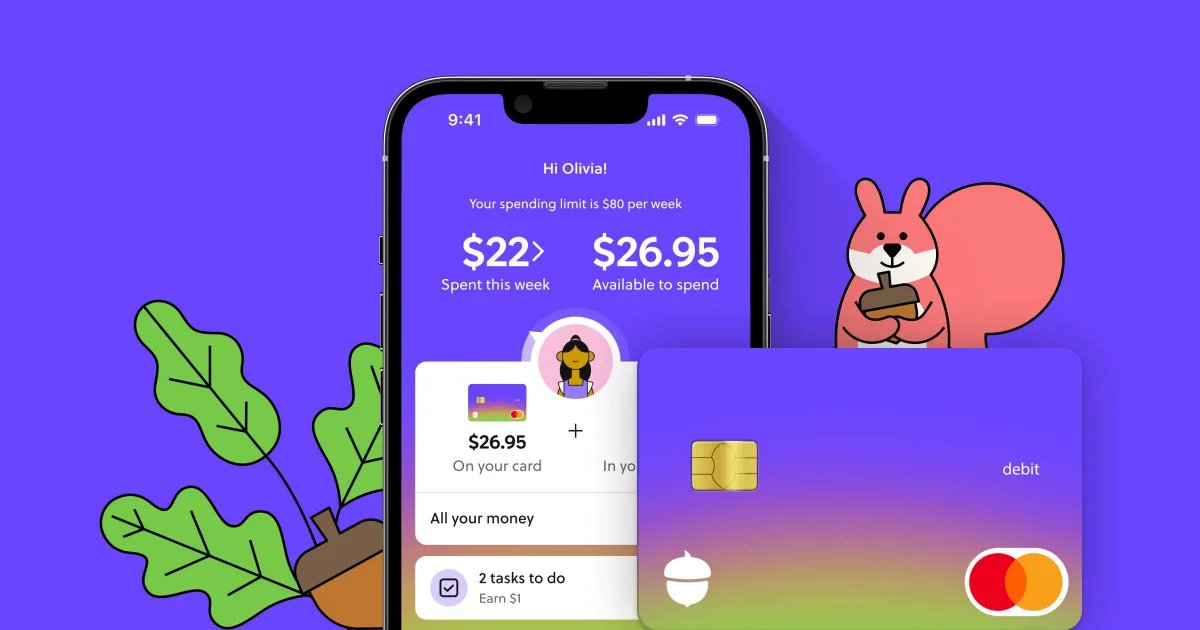
It introduces them to basic financial concepts using a debit card and simple investing tools.
Let’s face it, giving someone money without teaching them what to do with it doesn’t end well.
An Old School Anchor
The third pillar of my approach is the classic 529 college savings plan.
Despite all the new tools, I still think this is the one that matters most.
I’ve been contributing to 529 plans for both of my kids since they were born, and I’ve encouraged family members—especially grandparents— to do the same.
Thanks to these accounts, their education is on solid footing.
Now, let’s dispel some outdated myths about 529s.
No Longer a Cash Prison
There’s this idea that the money is “locked up” and can only be used for college, or else you get penalized.
That’s not the case anymore.
Rules have evolved. You can now transfer unused funds into an IRA under certain conditions. You can reassign the account to another family member. You can use it for a variety of education-related expenses beyond just tuition.
In other words, there’s more flexibility than most people realize.
Another important point: you don’t have to use your home state’s plan.
Some states—like New York, where I live—offer tax advantages for contributions.
And that’s great.
But you can absolutely shop around for the best-performing plans if that matters more to you.
Just make sure you understand the rules before committing.
The Overarching Goal
When I step back and look at the full picture—the 529 plans, the Acorns accounts, and now these new IRA-style Trump Accounts—I feel proud that I’m building a strong financial foundation for my kids.
Not just for college. But for life.
And that’s really the goal.
Because not everyone starts from the same place.
I was fortunate. My parents did well financially and helped me. But not everyone has that advantage.
Less is More
These tools level the playing field like never before.
You don’t need to be wealthy to get started. You just need to start.
Small amounts—$10 a week, $25 a week— turn into meaningful piles over time if you stay consistent.
Compounding doesn’t care how much you start with. It cares how long you stay invested.
So, if there’s one message I want to leave you with, it’s this…
Wrap Up
Don’t wait. Don’t overthink it. Don’t try to time the market. Don’t worry about doing it perfectly.
Just open the accounts. Set up automatic contributions. And let time do the heavy lifting.
Because when you look back years from now, you won’t remember the exact dollar amounts you put in.
You’ll just be glad you started.
And more importantly, your kids will be, too.

The Market Doesn't Check Your Birth Certificate
Posted November 13, 2026
By Sean Ring

Jensen Huangs Himself
Posted November 12, 2026
By Sean Ring

The Christmas Credit Hangover
Posted November 11, 2026
By Zach Scheidt
Cash Isn’t Cowardice
Posted November 10, 2026
By Sean Ring

Be the House
Posted November 09, 2026
By Sean Ring