Posted November 18, 2026

By Sean Ring
Divide Your Rulers
In 1798, Mayer Amschel Rothschild, a coin dealer in Frankfurt, sent his son Nathan to Manchester, England, to buy cotton cloth. Nathan never came home. By 1804, he was a was a naturalized British citizen and had founded what would become one of Europe’s most powerful banks in the City of London.
Over the next two decades, Mayer’s other sons left, as well.
While Amschel stayed at home in Frankfurt, James set up shop in Paris in 1811. Salomon settled in Vienna, with Carl making his way to Naples.
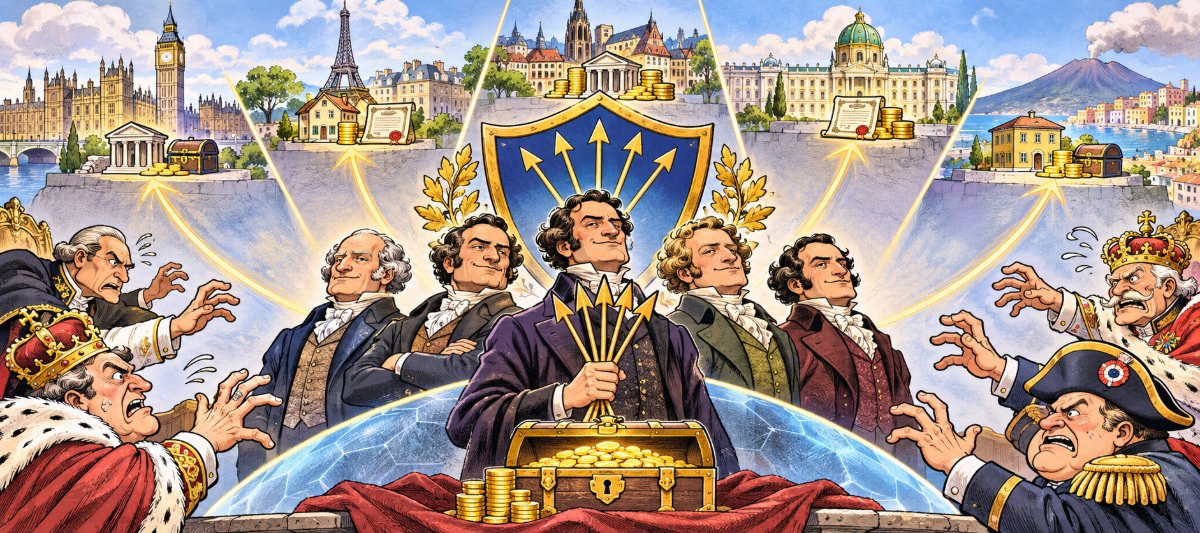
By 1821, the five brothers ran five banks under five different rulers.
In 1822, the Emperor of Austria made them barons. Their new coat of arms carried a bundle of five arrows.
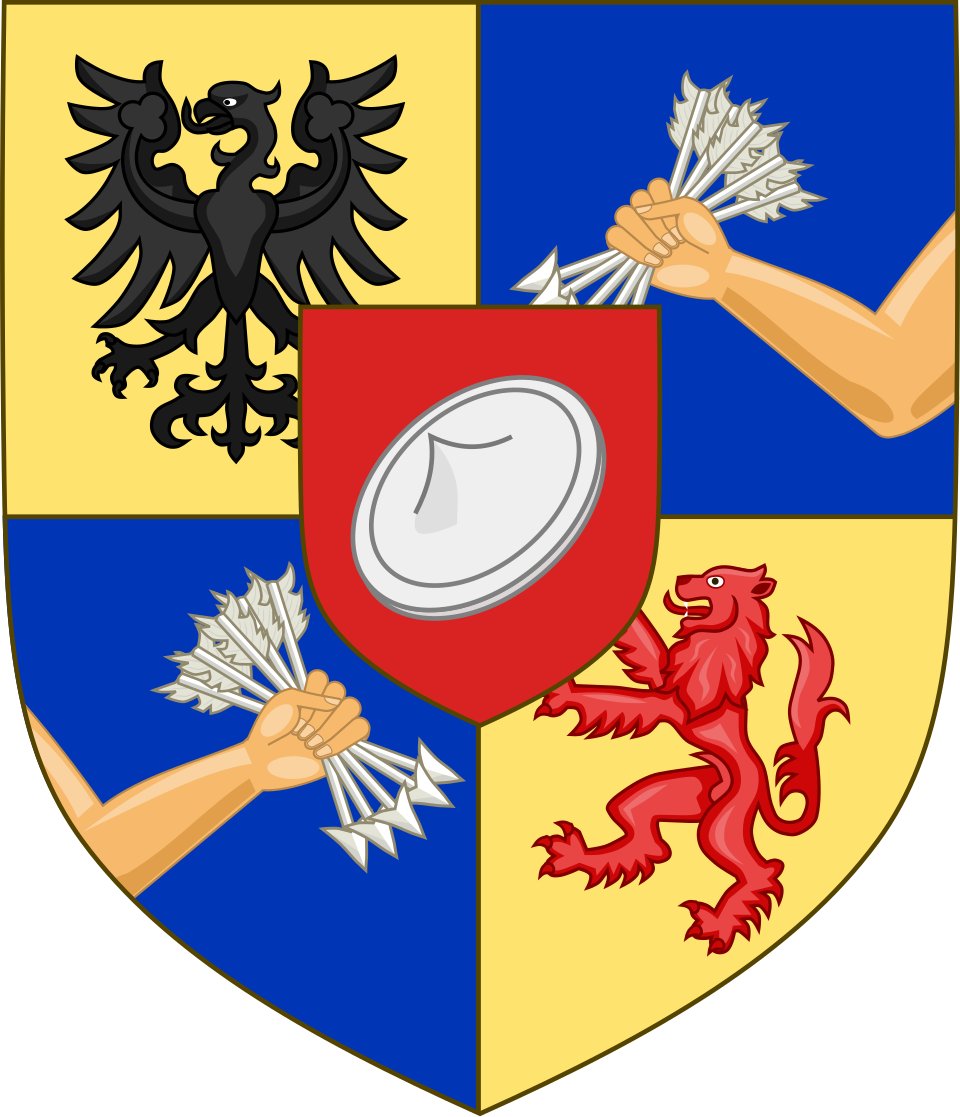 The Arms of the House of Rothschild. Credit: Wikimedia Commons

An old fable tells of a dying father who hands his sons a bundle of arrows and asks each of them to break it. None of them can. Then the father pulls the arrows apart and snaps them one by one.
The brothers understood the message long before they were elevated to the barony. United, they would be powerful. But, as Abe Lincoln once said, a house divided against itself cannot stand.
But they did more than stick together. They made the family business what Nassim Taleb would call “antifragile.”
By building their banks in different countries, no one government could hurt the family business.
When revolution swept Vienna in 1848, Salomon fled the city. Sure, his bank took a beating… but the family survived it. The four other arrows sat in four other countries. When Carl’s family was driven out of Naples thanks to Italian unification, the family business still stood. Is there any doubt about the power the Rothschilds wield even today?
I’ve been thinking about those arrows since the OWC shindig in Nashville.
Patriot Protection
“Sean, I heard you gave up your US citizenship. Why the hell would you do that?”
That’s one of the questions I got in Nashville. And that phrasing is how it’s usually asked. I don’t mind one bit.
The weird thing was how many members were asking about renunciation for themselves, as well as second passports, offshore bank accounts, and foreign residences.
The truth is, the midterm elections were a smack in the mouth to many of the OWC faithful. And even if you’re not a member of Paradigm’s Omega Wealth Circle, you may have the same questions yourself.
That’s completely normal. It’s like getting flood insurance before hurricane season. You’d be irresponsible if you didn’t.
The New Swamp Things will answer to the donors who put them in Congress, not to you.
But you don’t need to guess what the Swamp will do next. You only need to make sure no single decision they make can hurt you badly.
Like the Rothschilds. And it’s what I used to write about in the Rude all the time. But rather than arrows, we call them the Five Flags.
Planting Flags
Newsletter writer Harry Schultz thought everyone should hold a second passport, own a house in a tax haven, and park assets outside their home country. Later writers like James Dale Davidson and William Rees-Mogg upped his three flags to five.
You plant these flags while it’s calm so they’re there when the storm comes.
Most people who hold a second passport never flee their home countries. But it sure lets them sleep better.
I learned this the hard way.
In 2022, a thief stole my backpack while I ate lunch in Milano Centrale train station. My Italian passport was inside. But because I still had my British passport, I could still travel. With only one passport, I’d have been at the mercy of the government’s waiting list.
One Flag at a Time
Once or twice a week, I’ll take one flag at a time.
We’ll start with second passports. In March 2025, Italy rolled back its citizenship-by-descent rules to people with an Italian-born parent or grandparent. If this rule had been in force when I applied for my Italian passport, I never would’ve gotten it. That’s why acting on information as soon as possible is critical. A month later, Europe’s top court struck down Malta’s passport-for-cash program. The doors I walked through are narrower now, so I’ll show you which ones are still open.
Bank accounts. The dreaded FATCA legislation forced most foreign banks to stop accepting American customers. Opening an account in Zurich is damn near impossible these days. So I’ll show you a way to diversify into other currencies without leaving the American banking system. Then we’ll talk about gold, because how you hold it matters as much as whether you own it.
Real estate for ownership and fun. I own a farmhouse in Il Piemonte. I can tell you right now that you don’t need nine properties in nine countries to protect yourself. Though you may want a couple of boltholes in your favorite foreign countries.
Tax residence and asset protection. I’ll show you how the Italian tax system treats a small business owner like me. I'll also tell you about the taxes Americans can’t escape no matter where they live.
No Renunciation Necessary
Just over 15 years ago, I gave up my American citizenship. I’m glad I did. But I won’t ask you to do the same.
For 99.9% of Americans, it would be the biggest mistake they’d make. Remember, renunciation is permanent, and it can cost you far more than money. You can get most of the protection I’ll write about while keeping your American citizenship.
Wrap Up
You love your country. And so you should.
But this is about protecting yourself from confiscation. Your assets, investments, and savings are your life’s work. It’s what you made minus what you spent to live. No one—no entity—has any right to it. It’s yours, and you should be proud of it.
I’ve written many times before that you can’t save the world, but you can save yourself. In this endeavor, it’s better to be years early than a day late.

COUNTERPUNCH!
Posted November 17, 2026
By Sean Ring

Don't Leave Your Kid's $1,000 in the Swamp!
Posted November 16, 2026
By Enrique Abeyta

The Market Doesn't Check Your Birth Certificate
Posted November 13, 2026
By Sean Ring

Jensen Huangs Himself
Posted November 12, 2026
By Sean Ring
The Christmas Credit Hangover
Posted November 11, 2026
By Zach Scheidt