Posted November 17, 2026

By Sean Ring
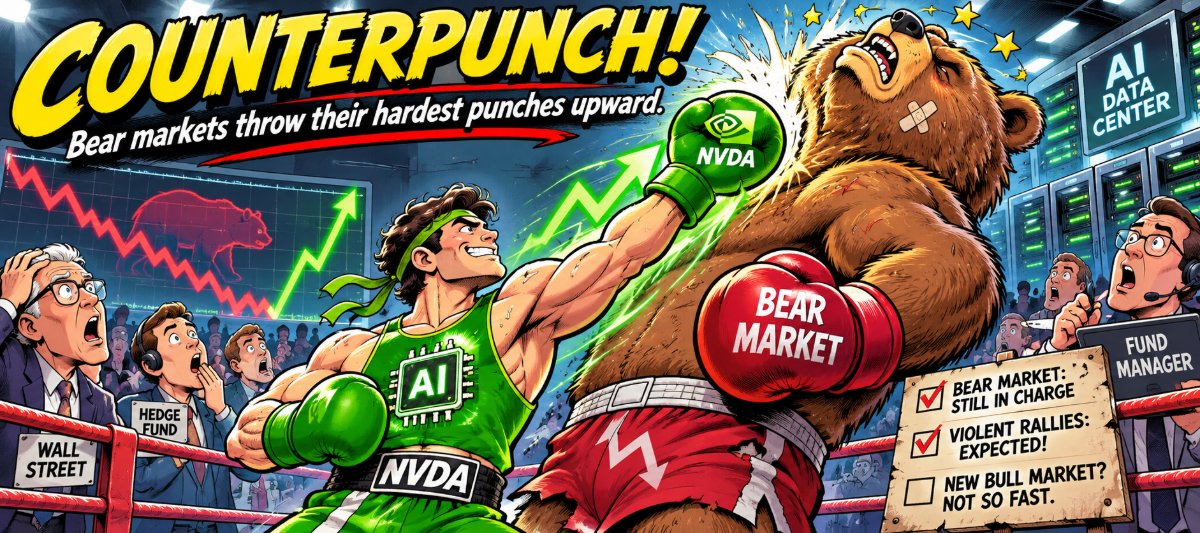
COUNTERPUNCH!
Last Friday at 4:37pm, I asked my friend and colleague Enrique Abeyta a pointed question on our Slack editorial channel.
For context, Enrique had written that this market was about to break down. He had told our OWC members in Nashville that NVDA will lose investors more money in the next three years than any other stock in history.
My pointed question was “If you think the arse is gonna fall out of this market, why did you just get long Nvidia?”
NVDA had fallen for six weeks, its longest losing streak since 2012. From its closing high of $239.24 on October 6th, the stock lost nearly a third of its value. On Thursday, Jensen Huang, NVDA’s CEO and public face, resigned for “sleeping with the enemy.”
If anything, Enrique’s doomsday prediction proved prescient— and bore fruit much sooner than he thought.
Five minutes after I had written, Enrique wrote back:
Because it doesn’t happen in a straight line, and the BEST money-making opportunities aren't necessarily being short but being LONG in the highest-quality companies—what I call ‘the counterpunch.’
I thanked him. But did history confirm his assertion? Let’s see.
Bear Market Rallies
In 2002, an analyst named Adam Hamilton ranked the Nasdaq’s biggest one-day gains from 1990 through May 2002. Every one of the top ten came after the bubble burst in March 2000, as the index was on track to lose 78% of its value. The eighth-biggest had landed that same week, on May 8, 2002.
The reason is mechanical.
Deep into a bear market, most people who wanted to sell have sold, and the short sellers have piled in. When a scrap of good news lands, there’s no one left to sell to, and the shorts have to buy back their bets all at once. Inevitably, prices pop.
So what do you do with that pop?
The 1930 About Face
On November 13, 1929, the Dow Jones Industrial Average had closed at 198.69. It was already down almost 50%, thanks to the crash. Then it rallied for five straight months. By April 17, 1930, it closed at 294.07, up 48%. Some stocks, including AT&T, even hit new all-time highs. Trading volume was robust. The Dow had clawed back to 4% below where it closed the day before Black Thursday.
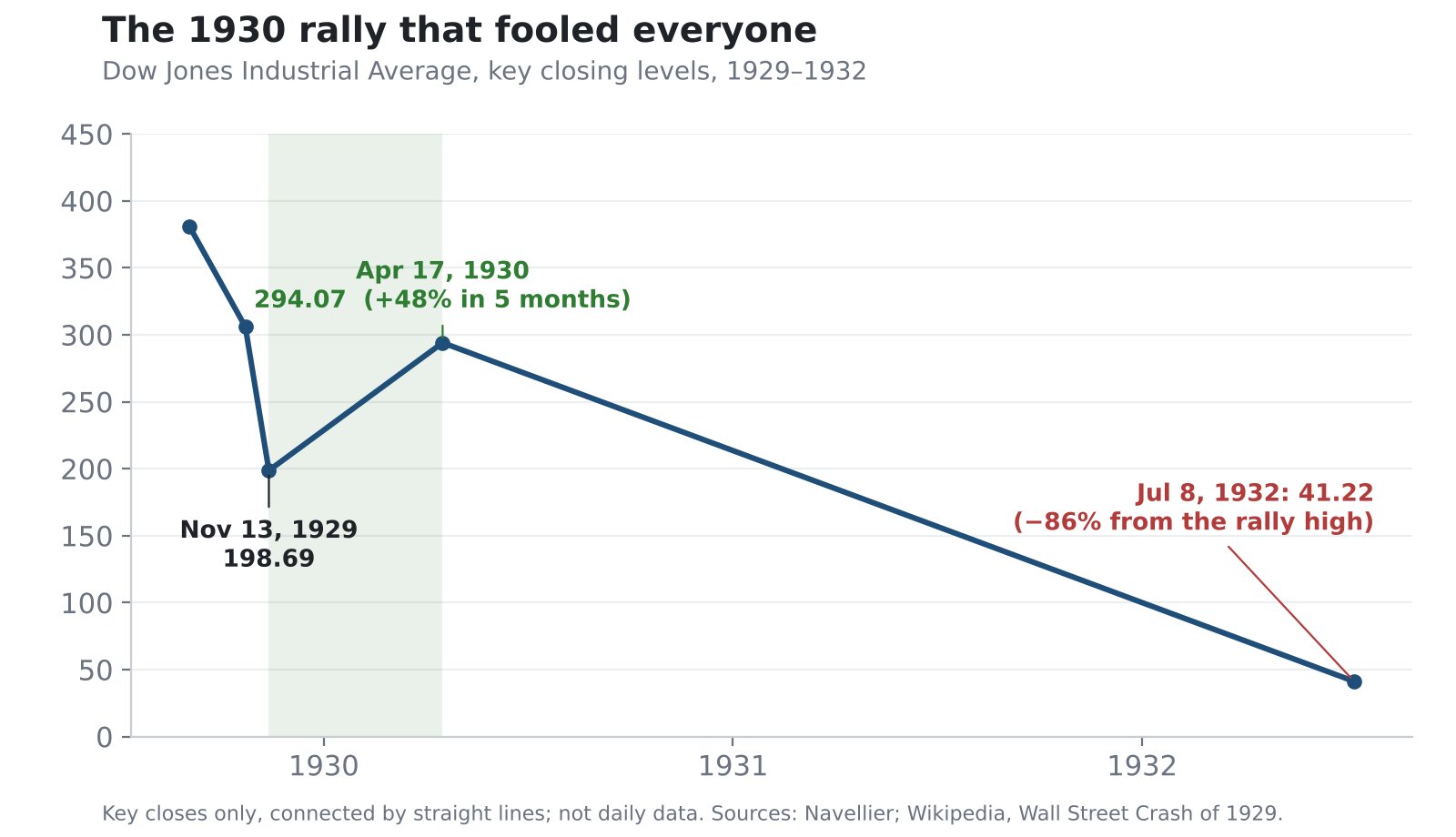
Then, from that April high, the Dow fell 86% to its July 1932 bottom. It took 24 years to get back to that level.
A counterpunch doesn’t mark a bottom. The rally off that bottom can be huge, but the following sell-off can be even bigger.
TSLA’s Ride
In May 2022, TSLA had fallen to $207. By mid-August, it hit $315, a roughly 50% gain.
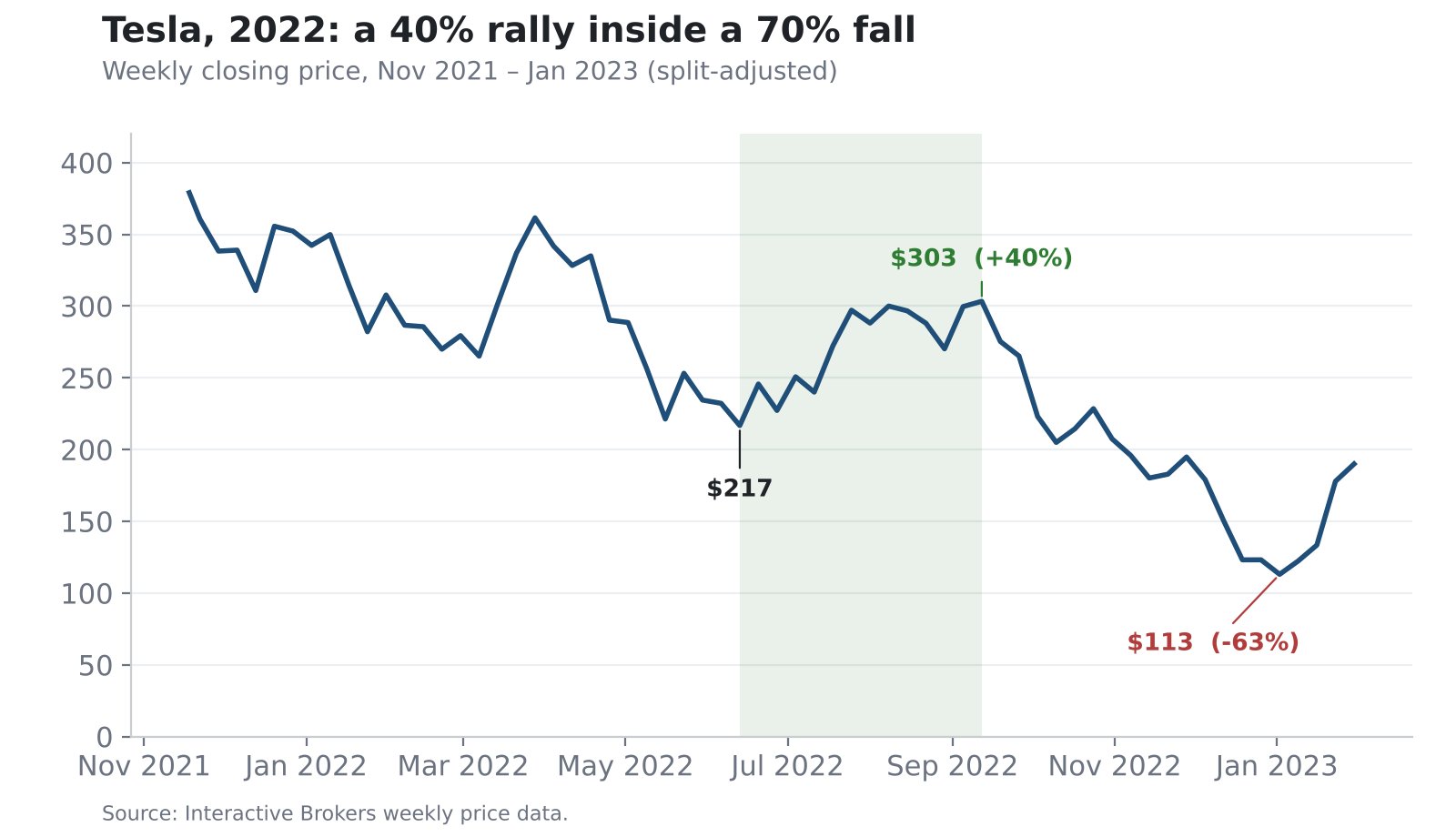
The rally ended there, and the bear market resumed. TSLA finished 2022 down 65%. It didn't start its turnaround until January 2023.
Investors who bought in May and sold in August made a fortune. Traders who fell in love became long-term investors.
Twice as Nice?
In 2022, NVDA threw two counterpunches.
The first came when it rallied 31% from late June to early August. Then it collapsed 41% to its weekly low of $112 in October.
The second counterpunch came right off that low. By early December, the stock had climbed about 51% from its October close. After a brief respite, the stock continued its rally and was up nearly 500% over the next eight months.
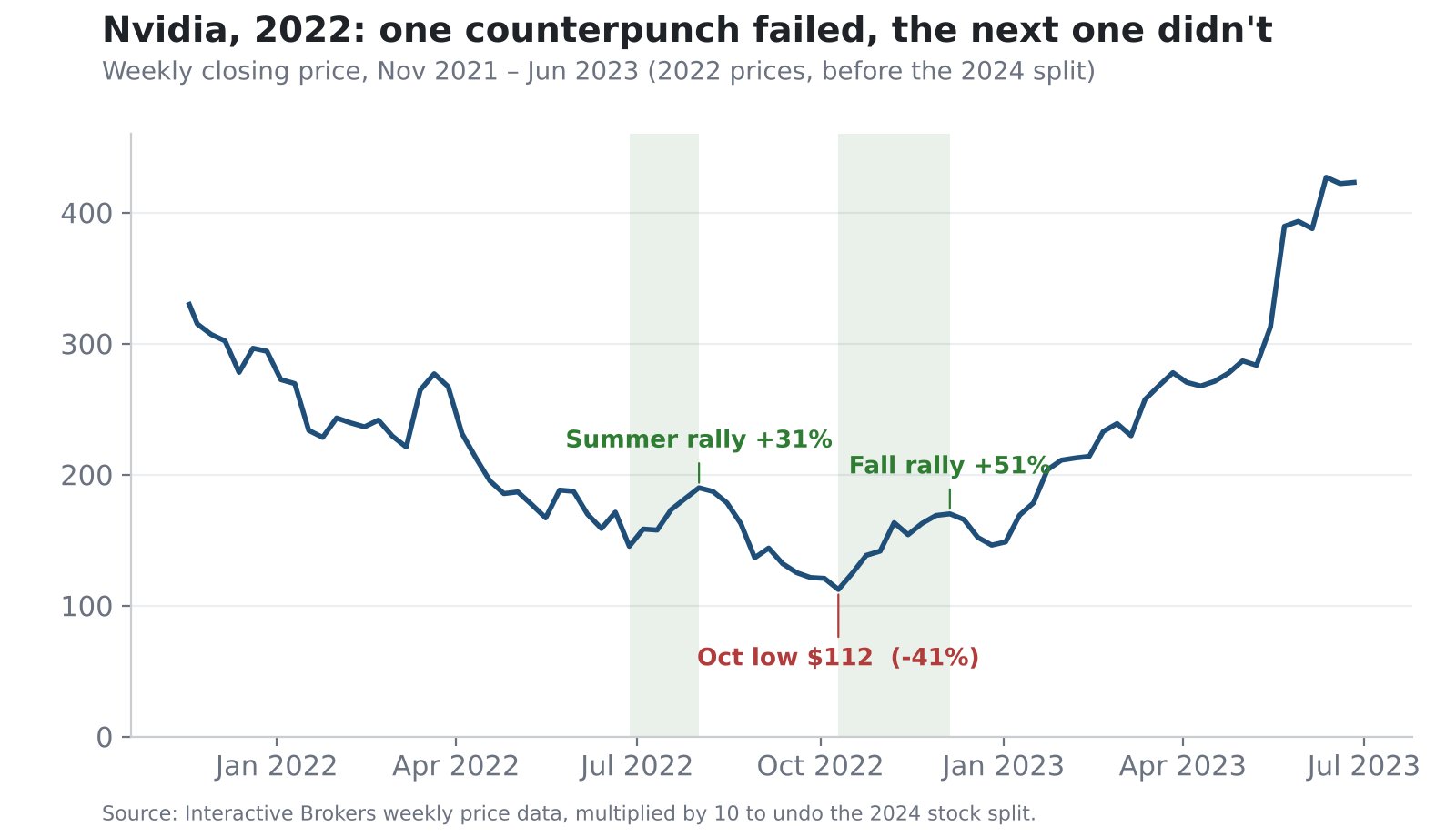
Rather than a short-term rally in a bear market, the second counterpunch marked the start of a new bull market because short sellers ran out of stock to sell, and the underlying business was profitable.
In a bear market, fund managers sell the best companies because they’re the easiest things to sell. Fund managers dump what they can, not what they want to. When selling stops, money rushes back to quality first, like a wave crashing back onto shore.
NVDA, Today
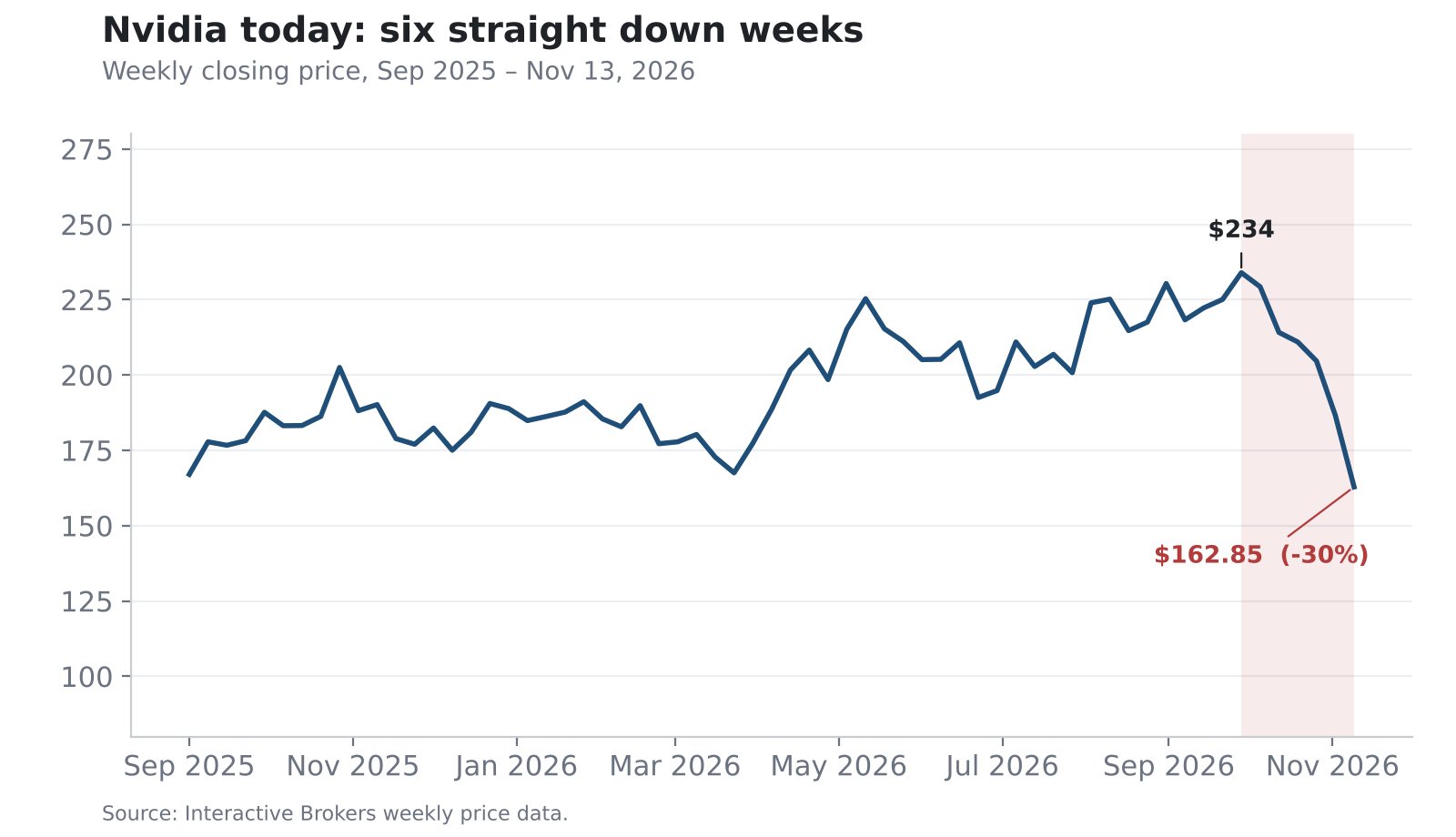
NVDA ended last week’s trading at $162.85.
To be sure, I’m bearish. The AI spending boom has a massive bill coming due. The debt that built many data centers will need big profits to pay it off. And NVDA’s interim CEO doesn’t seem to have the stomach for Jensen’s usual financing arrangements.
But Enrique’s point still stands. History agrees with him. The Dow didn’t fall in a straight line from 1929 to 1932. The Nasdaq didn’t fall in a straight line from 2000 to 2002. Every one of those bears threw counterpunches big enough to make a year’s returns in a few weeks.
The trick is not to let being right about the top keep you from profiting in the interim.
Wrap Up
Here’s how I’d use the counterpunch.
First, don’t fall in love with the trade. Before you buy, decide where you’ll take profits and where you’ll cut the loss. Do this by entering a bracket order with your broker. The 1930 market buyers and the 2022 TSLA buyers who stayed too long lost everything they’d made. And then some.
Second, buy only quality businesses. In a counterpunch, the strongest businesses bounce harder and hold their gains longer. Leave the story stocks for someone else. NVDA held its October 2022 low. In contrast, TSLA blew through its low by 48%.
NVDA reports its third-quarter results after the close today. Will it be another excuse to hit the sell button? Or could tomorrow’s trading session mark the start of a counterpunch?
Remember, markets don’t move in straight lines. A counterpunch profits from the zigzags.
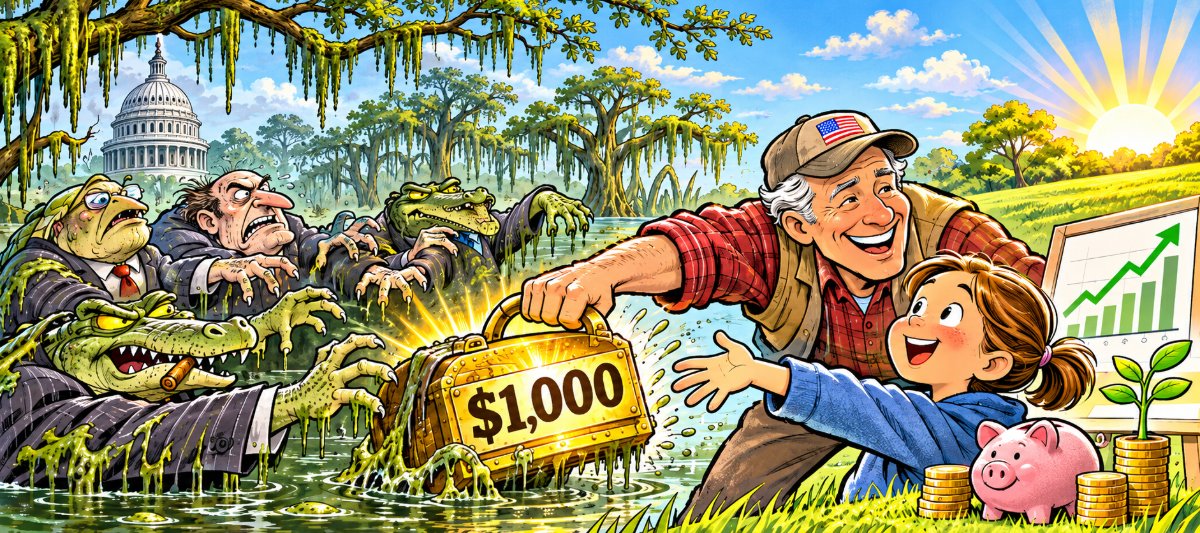
Don't Leave Your Kid's $1,000 in the Swamp!
Posted November 16, 2026
By Enrique Abeyta

The Market Doesn't Check Your Birth Certificate
Posted November 13, 2026
By Sean Ring
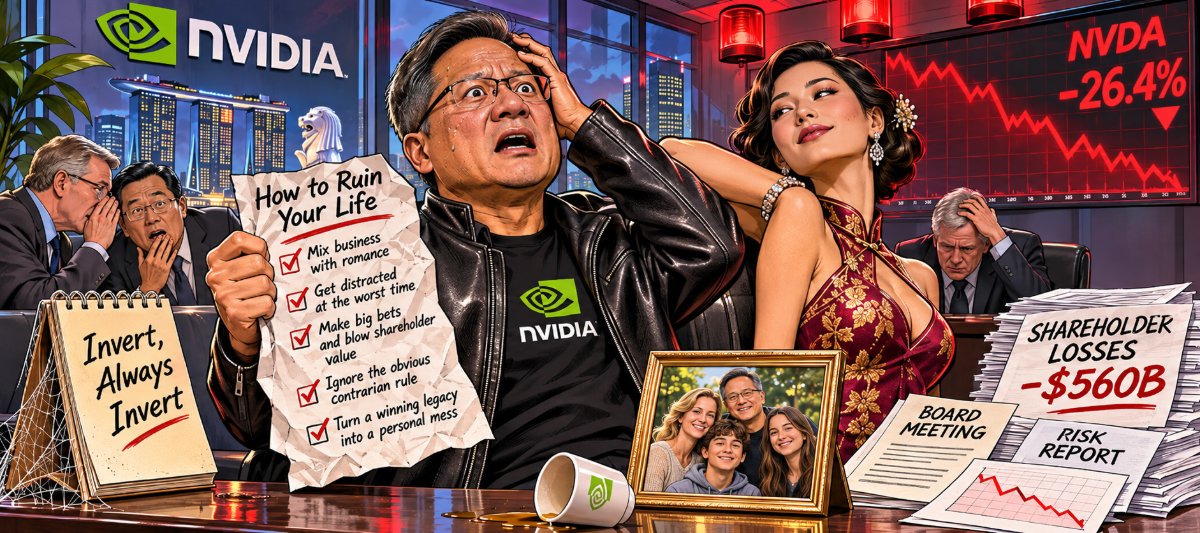
Jensen Huangs Himself
Posted November 12, 2026
By Sean Ring
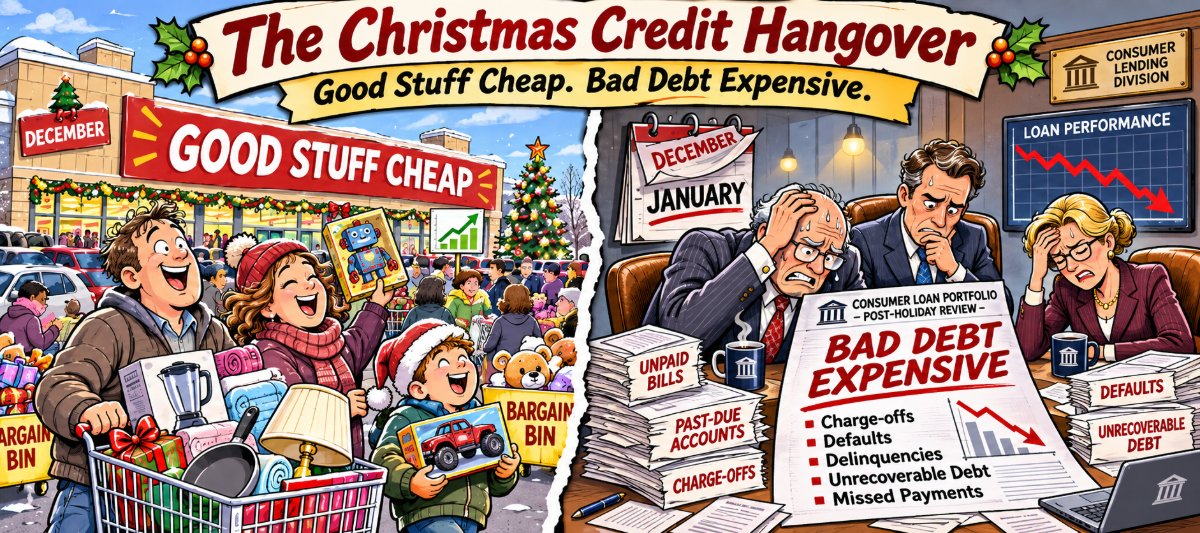
The Christmas Credit Hangover
Posted November 11, 2026
By Zach Scheidt
Cash Isn’t Cowardice
Posted November 10, 2026
By Sean Ring